When temperatures dip below freezing in Buncombe County, Code Purple opens its doors to people experiencing homelessness, offering a safe place to sleep until the morning. The program, which has operated in Asheville since 2009, is now confronting a significant budget gap.
Funding shortfall details
According to the November 12 Continuum of Care board meeting minutes, Code Purple’s projected cost for the 2026 season is $598,000. The program currently has about $376,000 in pledged funds, leaving a shortfall of roughly $222,000.
Funding sources include nearly $192,000 from the city of Asheville, $100,000 from Buncombe County, and about $85,000 from HCA Healthcare/Mission Health. With those contributions, the program is still far from covering its full operating costs.
Rising homelessness in the area
While the national point‑in‑time count showed a 3.3% decline in homelessness between 2024 and 2025, Asheville and Buncombe County experienced a 9% increase from 2025 to 2026. The local count recorded 490 individuals in emergency shelters or transitional housing programs.
North Carolina also saw a 33% jump in homelessness between 2024 and 2025, largely attributed to Tropical Storm Helene, which displaced about 4,000 residents.
Impact on shelter partners
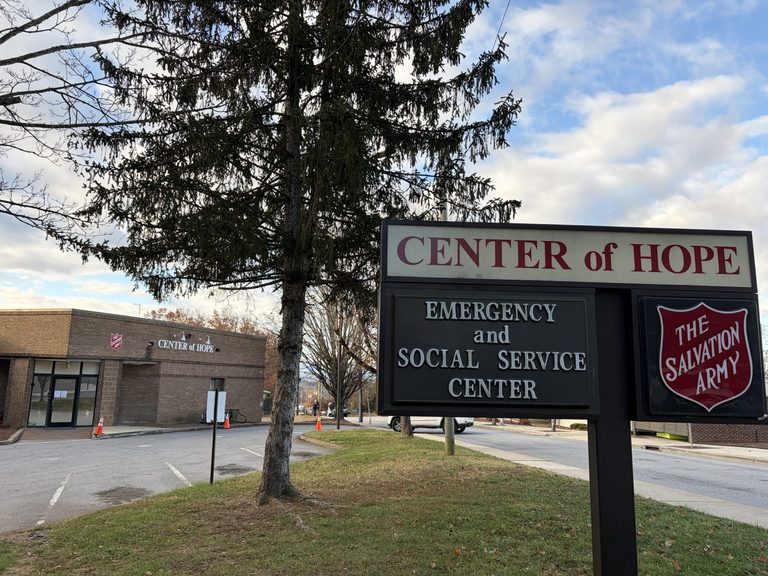
In prior years, partner agencies helped bridge funding gaps, but many are now stretched thin after federal cuts to nonprofit assistance. The Salvation Army, which previously provided beds for Code Purple, has paused its downtown Center of Hope shelter services through the end of April because of insufficient funding.
Two primary shelters now host Code Purple nights: Asheville Buncombe Community Christian Ministry’s Transformation Village and Homeward Bound, which operates out of the former Salvation Army Center of Hope. Homeward Bound added 20 beds to its day center and now runs 90 beds in the former Salvation Army facility.
Community response and fundraising
Emily Ball, the city’s homeless‑strategy manager and lead staff for the Continuum of Care, emphasized the program’s lifesaving role, stating, “Code Purple saves lives. It is a lifesaving emergency shelter for people in very critical situations.”
The Continuum of Care board is actively seeking ways to fill the budget gap, including a new fundraising campaign that invites individuals to donate directly to Code Purple. More than 660 organizations and individuals are already members of the Buncombe County Continuum of Care, which coordinates homelessness services across the region.
Long‑term solutions
Advocates point to affordable housing as a key factor in preventing homelessness. Pisgah Legal Services runs a prevention program that helps tenants avoid eviction and pushes for more affordable housing options. “Homelessness is correlated with housing prices and cost of living,” said David Bartholomew, director of the program.
As the winter season approaches, local leaders, faith‑based groups, and community volunteers are urged to support Code Purple to ensure that vulnerable residents have a safe place to stay on the coldest nights.
Original reporting: Carolina Public Press — read the source article.