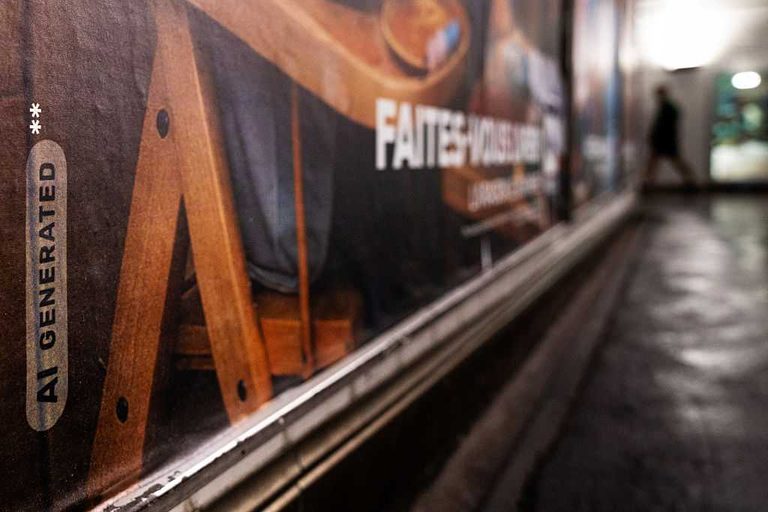
Several independent artists across the United States and abroad are abandoning Meta‑owned platforms after the company’s proposed updates to its terms of service raised concerns about AI data‑scraping. The changes would let automated software collect images, styles and other creative property from personal portfolios and business pages to train generative AI models, often without the creator’s knowledge.
Artists cite consent and livelihood concerns
Matty Burnham, a watercolor illustrator from the United Kingdom, discovered a Pinterest account that impersonated his work and used AI to generate copies that were sold through Shopify, Facebook and Instagram. Burnham traced the fake account to Ho Chi Minh City, Vietnam, but the perpetrators remain unknown.
Burnham says the AI‑generated profiles have “hundreds of thousands of followers” who believe they are authentic artists, directing traffic to shops and advertisements that profit from his original style.
Meta’s delayed policy update fuels uncertainty
Meta originally planned to enforce the new terms on Oct. 30, then postponed them to Nov. 20, and later announced an indefinite delay while it continues to engage stakeholders. A Meta spokesperson said the company is “pausing the changes as we continue to get this right,” leaving the existing terms in place for now.
Even with the delay, the prospect of unrestricted scraping has already prompted creators to pull back. Samantha Waldron, co‑owner of Dutcher Photography in Madison, Wisconsin, deleted all business and personal Facebook pages and converted her Instagram business profile to a personal account, removing most posts and external links.
“It was the last straw that was a long time coming. I’m frankly relieved not to have to worry about keeping up on social media moving forward,” Waldron said.
National response from artist groups
Tim O’Brien, board member of the Society of Illustrators, emphasized that artists deserve meaningful consent and fair compensation for the use of their work. “For many artists, this is not merely a legal dispute. It is a question of livelihood, creative ownership, consent and basic fairness,” he explained.
Nicole McKay, artists‑relations director at The Guild of Artists and Artisans, noted a surge of “goodbye” messages on Instagram and Facebook as creators choose to leave Meta platforms rather than risk their work being harvested for AI training.
Alternative platforms and tools emerge
Some creators are migrating to Patreon, Substack, or other creator‑focused communities that offer more control over content distribution. Others have launched “Meta blackout” campaigns, temporarily suspending posting to protest the policy.
Google recently released the free SynthID Detector, allowing users to upload files and check whether they were generated by AI. The tool, developed with partners including OpenAI and Nvidia, has already processed millions of verification requests.
Balancing protection and innovation
Isaiah Steinfeld, a board member of the American Institute of Graphic Arts who works with AI, argued that protecting creators and embracing new technology need not be mutually exclusive. He encouraged artists to register their work for copyright and pursue takedown requests through Meta’s Intellectual Property Reporting Center.
Meta states that creators can report infringing AI impersonators and submit takedown requests, but many artists feel the process is insufficient given the scale of automated scraping.
As the debate continues, creators must weigh the benefits of broad audience reach against the risk of their work being used to train AI without compensation or consent.
Original reporting: 40/29 / KHBS (NW Arkansas) — read the source article.