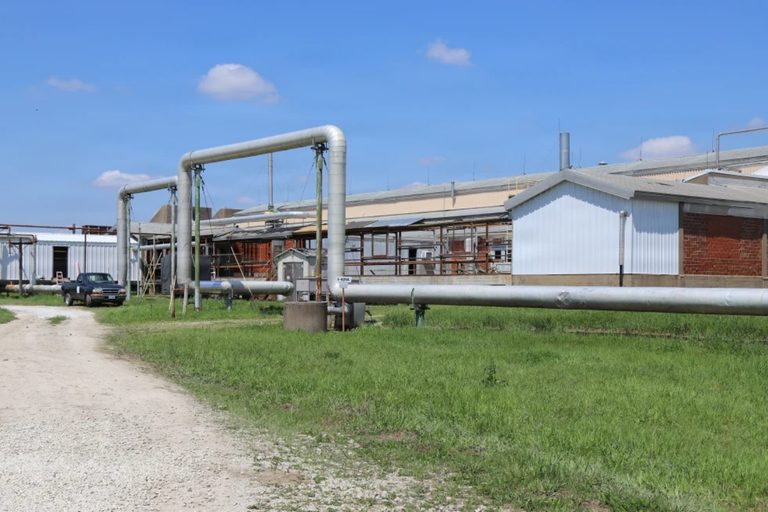
Middletown, Iowa – The U.S. Army announced that it will conduct a controlled detonation of roughly five tons of degraded lead azide at the Iowa Army Ammunition Plant on Thursday morning. Maj. Gen. Eric Shirley, the operation’s leader, said inaction is no longer an option because the aging chemicals could become unstable.
Safety measures and evacuation plan
Acting Secretary of the Army Adam Telle told residents that the goal is to keep the blast contained on the plant grounds. “We don’t believe that the public should be in a panic,” Telle said. “Our goal is to keep as much of it as we can here on our Iowa Army Ammunition plant to prevent it from traveling.”
Officials issued an emergency notification Tuesday morning. People within five miles (8 km) southwest of the plant may be asked to evacuate, while those up to 20 miles (32 km) away are advised to stay indoors with windows closed to avoid airborne lead dust, noise, and vibration.
The Army has installed additional blast barriers around the storage bunkers and will apply ballistic gels and foams to absorb dust. Thousands of gallons of water will be sprayed on the barrels before the explosion to further limit dust dispersion.
Wind direction and timing
The detonation was rescheduled from last Friday to Thursday because wind forecasts now favor a southwest flow, carrying any plume away from nearby Burlington, a city of just under 25,000 on the Mississippi River. New maps released Tuesday show the expected trajectory toward Missouri, a change from the earlier plan that would have sent the plume north.
The operation is set for 9 a.m. local time. An “imminent threat alert” was sent to cell phones, and the Army emphasized that the chosen wind conditions are the safest for the surrounding community.
Legal backdrop and presidential involvement
The federal appeals court approved the emergency permit, finding that the U.S. Environmental Protection Agency incorporated sufficient safeguards. Environmental groups had sued to halt the blast, arguing the EPA permit was inadequate. The court noted the Army evaluated a full range of alternatives, including chemical neutralization and thermal treatment, before concluding that detonation was the safest option.
President Trump, as commander in chief, posted on social media that he welcomed the court’s decision and asked Governor‑elect Rob Sand to endorse the plan. Governor‑elect Sand, a Democrat, said the decision rests with the Trump administration.
State and local response
Iowa Governor Kim Reynolds activated the state emergency management office and launched a website with information about the operation. “I trust the Army will do everything in its power to protect the people who could be affected,” Reynolds said after speaking with Defense Secretary Pete Hegseth and other military leaders.
Middletown Mayor Rodney Johnson called the detonation necessary so the community can “move on with our lives.” He urged residents to seal windows and doors as a precaution and to clean outdoor surfaces with water after the blast.
Missouri Governor Mike Kehoe said state agencies will monitor air and water quality, public health, and agricultural resources following the explosion.
What residents should do
Officials recommend staying indoors during the detonation, keeping windows and doors closed, and washing down any outdoor surfaces with water afterward to reduce exposure to lead particles. The Army will continue to monitor air quality and provide updates through the state‑run website.
While the plan has sparked concern among some community members, both federal and state leaders stress that the extensive safety precautions make the controlled detonation the most responsible way to eliminate a hazardous stockpile that could otherwise pose a far greater risk.
Original reporting: Capitol City Now (WTAX 1240 Springfield) — read the source article.