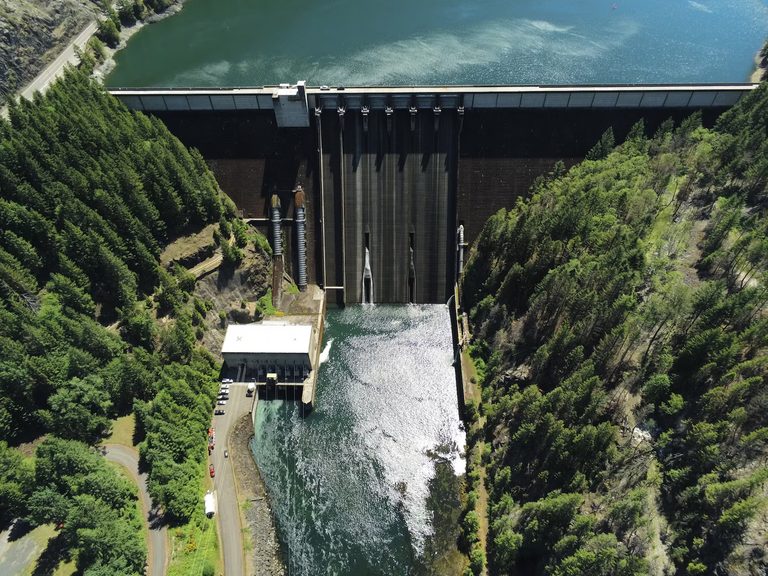
The U.S. Army Corps of Engineers announced that a deep drawdown of the Detroit Reservoir will begin in late November, lowering the water level to an elevation of 1,425 feet. The move follows a U.S. District Court decision in Eugene and fulfills requirements set out in the National Marine Fisheries Service’s 2024 Biological Opinion for Detroit Dam.
Why the drawdown matters
Scientists with the National Oceanic and Atmospheric Administration say that reduced water elevations improve passage for endangered young salmon and steelhead in the Santiam River basin. By exposing the dam’s lower outlets, the fish can more easily reach the ocean, supporting recovery efforts for these iconic species.
What the operation will look like
The drawdown to 1,425 feet is expected to take up to two weeks. Once that level is reached, the Corps plans to hold it for an additional two weeks before refilling, unless a storm forces an earlier refill. This phased approach is part of a multi‑year step‑down plan that will eventually target a permanent elevation of 1,395 feet. Incremental lowering each autumn helps limit the amount of previously submerged sediment that is released into the river in any single year.
Historical context and safety
Water levels at 1,425 feet match those recorded during drawdowns in 2015 and 2019, periods that did not produce reported drinking‑water impacts or downstream turbidity problems. Historically, the reservoir has been reduced to 1,450 feet each fall to preserve capacity for seasonal flood‑risk management. Current low levels are the result of seasonal drought, though overall levels remain within normal ranges.
Protecting drinking water
To safeguard downstream water quality, the Corps will monitor conditions before, during, and after the drawdown. An active Emergency Response and Communication Plan is in place, allowing the Corps, the Oregon Health Authority, the Oregon Department of Environmental Quality, and local water providers to pause or stop the operation if a drinking‑water emergency arises.
Public information sessions
Virtual public information sessions are scheduled for November 18th to explain the drawdown schedule, duration, and coordination with state agencies regarding drinking water. Specific meeting times will be posted within the week.
Looking ahead
Modeling and historical data indicate that the reservoir will reliably refill to meet both community and environmental needs after the temporary drawdown. The step‑down strategy reflects a balanced effort to protect endangered fish while ensuring a stable water supply for residents and downstream users.
For updates and details on the upcoming drawdown, residents can visit the Army Corps of Engineers’ website or attend the November 18th virtual sessions.
Original reporting: KTVZ (Central Oregon) — read the source article.