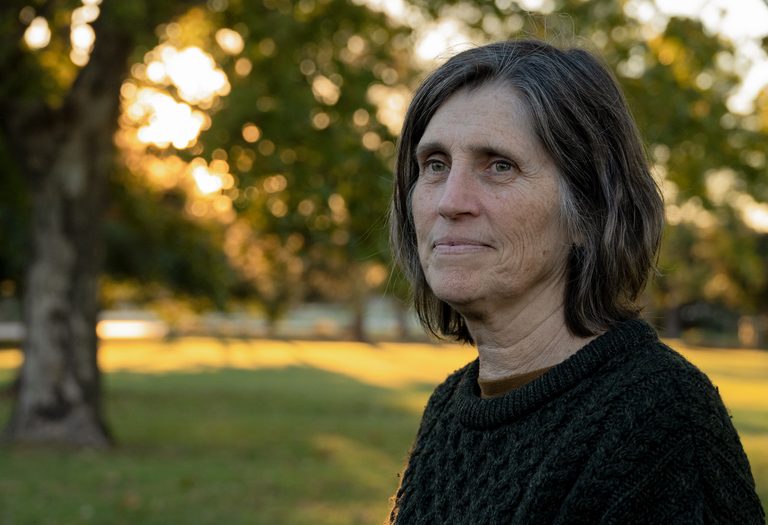
When Arlington resident Michelle Hennessy, 63, signed up for a University of Texas at Arlington (UTA) research study on aging, she expected routine health checks. The study’s comprehensive battery of scans, including brain imaging, revealed a bright spot on her brain.
Incidental finding leads to diagnosis
Study principal investigator Michael Nelson informed Hennessy that the spot warranted a follow‑up with her primary‑care physician. After referral to a specialist and a higher‑resolution scan, doctors identified a brain tumor. Though the initial scan could not determine the type, a subsequent scan six months later showed no growth.
Hennessy was advised to see specialists at UT Southwestern Medical Center, which focuses on gliomas—tumors that arise in the brain or spinal cord. While she hesitated due to insurance costs, she eventually scheduled an appointment.
Specialist confirms low‑grade glioma
At UT Southwestern, a neurosurgeon reviewed Hennessy’s latest imaging and suspected a glioma, a diagnosis later confirmed after a final scan. The tumor was classified as low‑grade and lacking concerning mutations.
On July 30, surgeons removed the tumor entirely, sparing Hennessy the need for chemotherapy or radiation. The only side effect was a loss of peripheral vision above her left eye, which she considers minor.
Study’s broader impact and community response
The UTA aging study, now past its halfway point with over 300 participants, aims to enroll 600 volunteers aged 50‑85 from Tarrant County. Researchers emphasize that incidental findings—ranging from high blood pressure to tumors—can provide life‑saving information.
Hennessy says the experience has deepened her faith and community involvement. She has revived a church food‑service initiative and begun praying the rosary daily. While her health scans overall show she is “healthy,” the unexpected tumor reminded her of the value of vigilance and gratitude.
Residents interested in joining the study can contact [email protected]. The study continues to collect data that supports health‑science research across the region.
Original reporting: Fort Worth Report — read the source article.