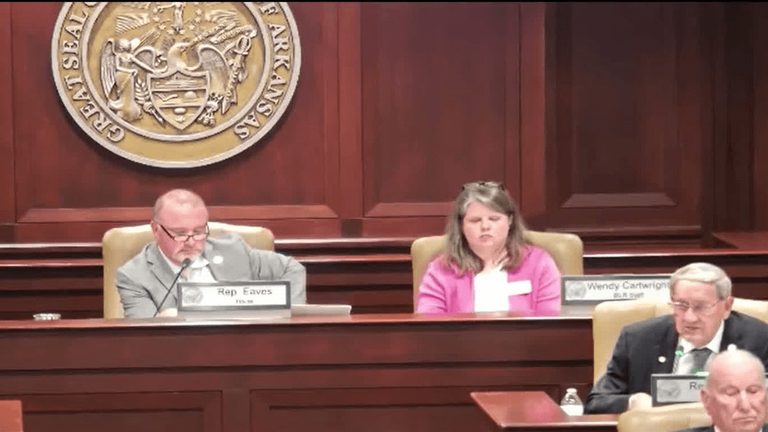
Little Rock, Ark. – During a recent meeting of the Legislative Council and the Joint Budget Committee, Arkansas lawmakers debated how to allocate the state’s school‑safety grant program for fiscal year 2028. Representative Jack Ladyman (R‑Jonesboro) pushed for an additional $1 million to be set aside for testing advanced safety technologies, including Campus Guardian Angel’s drone system designed to deter active‑shooter threats.
Proposal and rationale
“I don’t want another school shooting in Arkansas; we should do everything we can to prevent that,” Ladyman said, emphasizing the need for cutting‑edge tools to protect children. He argued that a modest boost would allow districts to evaluate whether drones could provide a rapid response to violent incidents on campus.
Opposition and fiscal concerns
State Senator Missy Irvin and Senator Deanna Vaughn quickly opposed the motion. Irvin noted, “We have $13 million unspent that can be used for those purposes,” suggesting the existing unallocated funds should cover any testing without creating a new line item. Vaughn echoed the sentiment, stressing that the money belongs in the adequacy portion of the budget, not a separate program.
House Majority Leader Howard Beaty Jr. added, “To willy‑nilly add a million in a new program without vetting it and having a process, although I support the idea, adequacy is where it needs to be.” Representative Les Eaves confirmed the motion’s defeat, stating, “You’ve heard the motion, the no’s have it.”
Budget outcome
The final appropriation bill will allocate $16 million for school‑safety grants, unchanged from the previous level, rather than the $17 million that Ladyman had proposed. Lawmakers will still have the $13 million that remains unspent in the current safety fund, which they intend to direct toward existing safety initiatives.
Implications for schools
While the drone technology will not receive dedicated state funding this cycle, the discussion highlights growing interest in innovative safety solutions. School districts may still pursue pilot programs using existing grant money or private partnerships, but they will need to demonstrate clear vetting processes and measurable outcomes before seeking additional legislative support.
Community response
Parents and educators expressed mixed reactions. Some welcomed the idea of high‑tech protection, while others cautioned that funds should first address proven safety measures such as secure entry points, mental‑health resources, and staff training. The debate underscores the broader challenge of balancing fiscal responsibility with the desire to adopt emerging technologies in public schools.
As the Arkansas Department of Education prepares to issue the final grant guidelines, districts will watch closely to see how the unspent $13 million is allocated and whether any future legislative sessions will revisit funding for drone‑based safety initiatives.
Original reporting: KATV Little Rock (local) — read the source article.