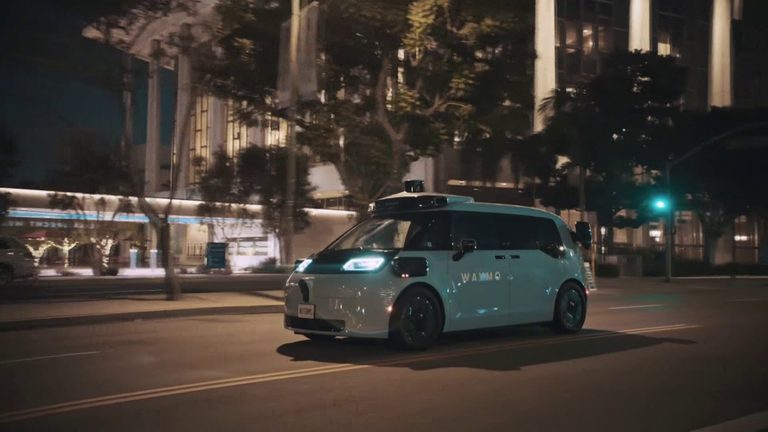
PHOENIX — As Waymo rolls out its new blue Ojai robotaxis on Arizona streets, former federal safety adviser Missy Cummings is pressing for a thorough, independent security review. Cummings, an autonomous‑vehicle researcher at George Mason University, warned that the Chinese‑manufactured vans could be exploited by foreign adversaries to spy on passengers and gather data near sensitive sites.
Potential risks highlighted
Cummings told the Generation AI podcast that the vehicles continuously collect video and sensor data, which could reveal personal details or even information about nearby military installations. While Waymo says the vans arrive without connected‑car technology and that the company installs its own cameras, sensors and self‑driving systems at a Mesa facility, she argues that this may not be enough to eliminate hidden vulnerabilities.
She cited past incidents, such as the 2024 discovery of concealed cellular modems in Chinese‑built cranes at U.S. ports, to illustrate how foreign‑made hardware can pose security threats. Cummings also noted the theoretical risk that a compromised autonomous vehicle could be remotely taken over and used as a weapon, though she considers that scenario less likely than surveillance concerns.
Legislative response
Congress is already acting. A bipartisan bill introduced by Sen. Bernie Moreno (R‑Ohio) and Sen. Elissa Slotkin (D‑Mich.) – the Connected Vehicle Security Act of 2026 – would ban vehicles built in China, even if the self‑driving software is American. The measure cleared the Senate Commerce Committee unanimously in July.
Despite the bill’s momentum, Cummings cautioned against a blanket ban, saying, “I’m not generally a big fan of bans because I think you can throw the baby out with the bathwater.” She pointed out that some support for the legislation stems from economic interests seeking to protect the domestic automotive sector.
Proposed oversight solution
Instead of an outright prohibition, Cummings recommends stronger technical oversight. She suggests that federally funded research centers such as MIT Lincoln Laboratory, which have security expertise and independence from both industry and government, conduct detailed inspections of the vehicles’ components.
For Arizona passengers, Cummings emphasized broader privacy concerns, urging riders to be mindful of the data they share: “You should never talk about anything that you wouldn’t be willing to see on the Internet.”
Economic context
Waymo estimates it will import about 5,000 Ojai vehicles this year, more than doubling its existing fleet. Analysts say the Ojai vans cost roughly $100,000 each, compared with about $200,000 for the company’s Jaguar SUVs, even after steep tariffs on Chinese exports.
The discussion continues as Arizona residents and lawmakers weigh national security against the benefits of advanced autonomous transportation.
Original reporting: azfamily KTVK/KPHO Phoenix (news) — read the source article.