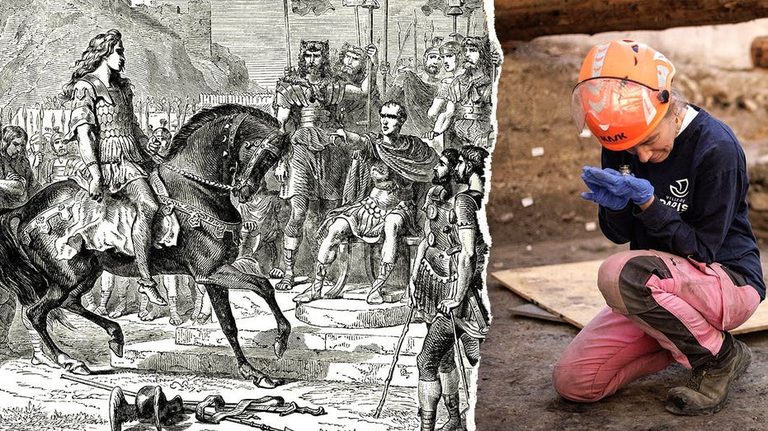
Paris archaeologists announced a major find this week: a 66‑foot wall of stone blocks and interlocking timber beams uncovered in the courtyard of the historic Hôtel‑Dieu hospital, just steps from Notre‑Dame Cathedral in the city’s 4th arrondissement. The French Ministry of Culture said the structure may be part of the ancient Gallic settlement of Lutetia that Julius Caesar described in his *Commentaries on the Gallic War*.
Excavation background
The dig began in February as part of a “major redevelopment project” at the hospital. Researchers originally expected to encounter medieval or early‑modern layers, but instead they uncovered a wall built in the Gallic tradition, complete with large stone blocks and a system of wooden beams. Radiocarbon testing of the timber suggests the wall dates between 200 B.C. and 10 B.C., aligning with Caesar’s account of the Parisii tribe burning their own fortified settlement in 52 B.C. to keep it from Roman hands.
Official comments
French Culture Minister Catherine Pégard called the discovery “one of the most important” for understanding ancient Lutetia, while stressing that scientific caution remains necessary until the wall’s function and exact chronology are confirmed. “The convergence of evidence is particularly remarkable,” she said.
Archaeology official Dorothée Chaoui‑Derieux of the DRAC Île‑de‑France noted that the fire damage on the wall matches Caesar’s description of the Parisii’s self‑destruction. “The architecture of the wall, with its large stone blocks and interlocking wooden beams, quickly made us think of a Gallic‑style fortification,” she explained.
Future plans
Because the redevelopment will not allow the wall to stay in situ, the team plans to reconstruct part of it using original stones for display in a Paris museum. Further excavations are scheduled to investigate the platform behind the wall and any buried remains that could clarify its purpose.
Regional archaeological conservator Stéphane Deschamps said the find “fills a gap in the archaeological record.” He added that some scholars previously argued the ancient settlement might have been located in Nanterre, but the new evidence could finally settle the debate.
Significance
If confirmed as part of Lutetia, the wall would provide the first tangible link to Caesar’s written account of the Gallic capital, offering scholars and the public a clearer picture of Paris’s pre‑Roman origins. The discovery also underscores the importance of preserving archaeological heritage even amid modern urban development.
Original reporting: Fox News (HLL/CB) — read the source article.