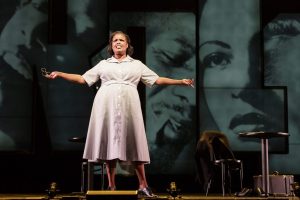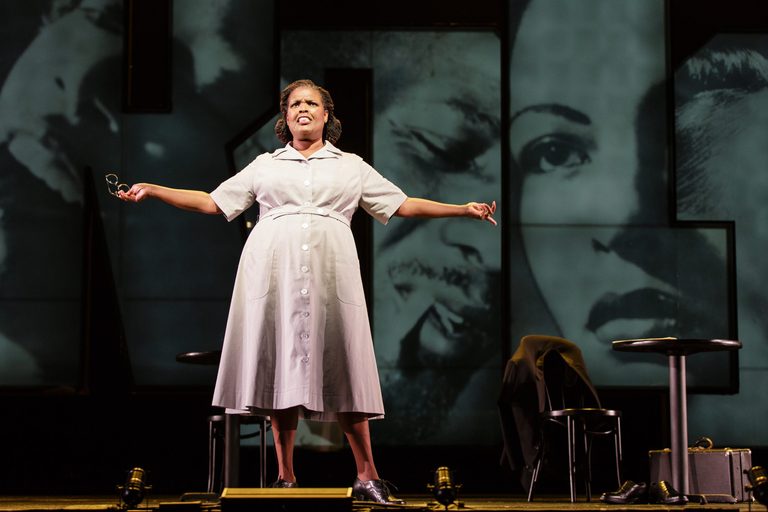
On Thursday, Nov. 5, Indianapolis native and internationally acclaimed soprano Angela Brown returned to Indiana University’s Jacobs School of Music to mark the 35th anniversary of the Archives of African American Music and Culture (AAAMC). The concert, titled “From Promise to Purpose: Angela Brown in Concert,” offered more than a showcase of vocal talent; it was a personal journey through her family’s history and the cultural legacy that shaped her artistry.
Celebrating a unique collection
Brown’s archives were formally recognized by AAAMC on Oct. 14, 2010, and have since served as a foundation for her storytelling on stage. During the evening, she opened a video presentation that traced her early years, from singing in her grandfather’s Mt. Calvary Missionary Baptist church at age five to the moment she first performed Verdi’s “Ritorna vincitor!” in Aida, the role that launched her global career.
A blend of musical traditions
The program highlighted Brown’s versatility. After the Verdi aria, she performed George Gershwin’s “Summertime” from Porgy and Bess, insisting it is an opera rather than a musical. She sang the piece twice—first in its operatic form, then as a jazz interpretation—demonstrating her ability to move fluidly between classical and contemporary styles.
Accompanying Brown were guitarist Tyron Cooper, Ph.D., bassist Billy Myers, percussionist Cassius Goens, trumpeter Ansyn Banks and pianist Kelleen Strutz. Their dynamic support allowed the audience to appreciate both the intricate arrangements and the power of Brown’s voice.
Honoring literary giants
Brown credited three towering Black literary figures—poet‑essayist Mari Evans, Nobel laureate Toni Morrison, and poet Maya Angelou—as central influences. Their impact inspired the cabaret‑style presentation “Mari, Morrison, Maya, and Me.” In 2005, Brown originated the role of Cilla in Richard Danielpour’s opera Margaret Garner, a work whose libretto was written by Morrison. Later, Danielpour composed the song cycle “A Woman’s Life” especially for Brown, setting Angelou’s poetry to music and premiering it in 2009.
Family roots and personal reflections
Brown shared artifacts from her personal collection, including photographs and memorabilia from her early church choir. She introduced her parents—Walter Clyde Brown, an autoworker, and Freddie Mae Brown, an artist and painter—describing their voices and stories as “awe‑inspiring.” Recalling her mother’s advice, “Angie, you need to write things down,” Brown emphasized the importance of preserving memory, noting, “You forget things.”
She expressed gratitude for the opportunity to give back to her alma mater, saying, “It has been beautiful to come back and take a little trip down memory lane.” The evening underscored how the archives serve not only as a repository of artifacts but also as a living testament to the relationships and influences that transformed promise into purpose.
Community impact
The concert reinforced the role of the AAAMC in safeguarding African American musical heritage and highlighted the importance of local institutions in nurturing talent. By sharing her story, Brown offered Indianapolis residents a vivid example of how cultural heritage and family legacy can inspire artistic excellence.
Original reporting: Mirror Indy — read the source article.