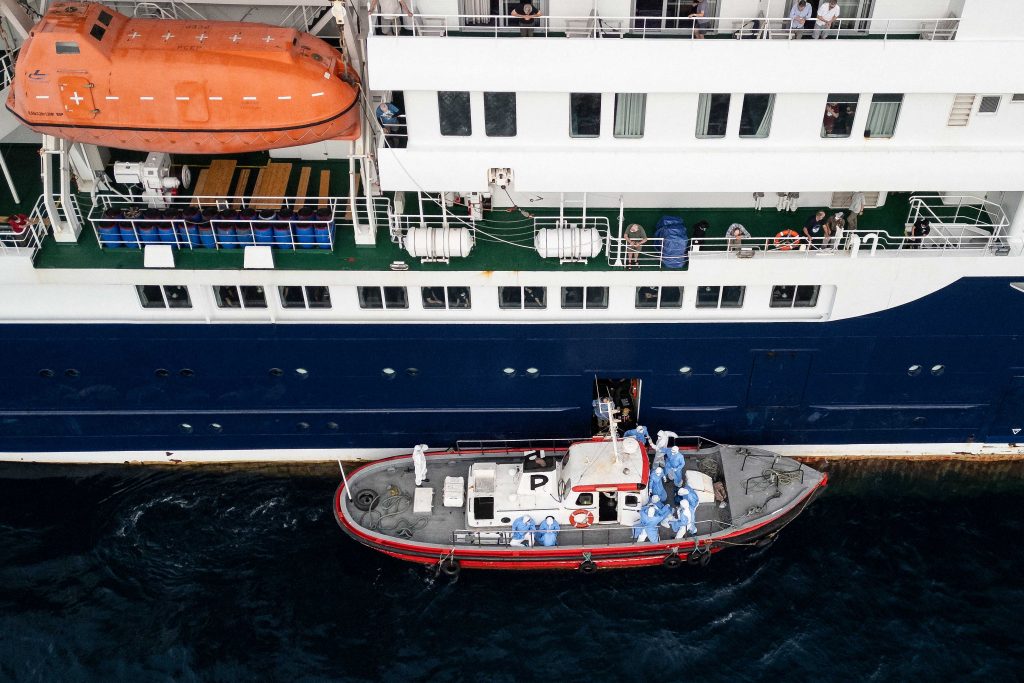
Spanish port authorities and public health officials are at the center of a tense situation after passengers aboard a recent ship tested positive for the Andes strain, known for its capacity to spread between people. The discovery prompted immediate debate over whether the vessel should be allowed to dock in Spain, with at least one local leader publicly opposing docking. Health teams scrambled to assess risk, isolate potential cases, and brief passengers and crew as officials weighed public safety against humanitarian and logistical concerns.
Word of the Andes strain aboard a passenger ship set off alarm bells because this is not a run-of-the-mill seasonal germ. The Andes virus is notable for documented person-to-person transmission in certain outbreaks, so public health authorities treat any confirmed case with extra caution. That unusual transmission pattern forces a different response compared with typical respiratory viruses, especially in confined environments like ships where close contact is common.
Onboard testing identified the strain in multiple passengers, and those positive cases became the immediate focus for containment. Medical teams began isolating infected individuals and tracing close contacts to stop further spread, a standard infectious-disease playbook applied quickly. For passengers and crew, the uncertainty translated into sudden restrictions, added screening and a wave of anxiety that followed each new update from health officials.
Local political leaders moved into the spotlight as the docking question became public. A local leader voiced opposition to allowing the ship to disembark in Spain, arguing that the potential public-health impact outweighed the benefits of immediate docking. That stance forced national and regional authorities to balance local concerns with international maritime obligations and the practicalities of managing sick passengers at sea.
Port authorities had to juggle several immediate tasks: assess the ship’s medical capacity, coordinate with national health agencies, and identify suitable quarantine or transfer options ashore. Ships can offer limited isolation facilities, but serious cases typically need hospital care that only land-based facilities can provide. That necessity often becomes the decisive factor when officials decide whether to allow a docking for medical evacuation or to reroute the ship elsewhere.
International health bodies and maritime regulators usually urge transparency and cooperation in such episodes, and rapid information-sharing helps minimize confusion. Contact tracing across different countries remains a logistical headache, especially when passengers come from multiple nations and will travel onward following disembarkation. The faster authorities communicate, the better the chances of containing spread without imposing blanket travel bans that can be hard to justify or enforce.
For travelers and the public, practical precautions are straightforward: follow instructions from onboard medical staff, report symptoms immediately, and comply with testing and quarantine orders. Health experts stress that panic is counterproductive, but vigilance is crucial—early detection and isolation are the best tools to blunt transmission. Passengers should expect delays and possible medical evaluations before being allowed ashore, while crew members often face extended duty and heightened work stress during containment efforts.
Beyond the immediate operational response, the episode raises larger questions about preparedness and protocol for ports and cruise operators. Are screening procedures at embarkation and during voyages robust enough to catch cases early? Do carriers and ports have clear, practiced plans for isolating and transferring patients? This incident will likely prompt reviews of those plans and renewed emphasis on training and resources so future events are handled more smoothly.
In the weeks ahead, health authorities will monitor contacts and publish updates as testing and tracing progress. Officials must strike a careful line between protecting public health and honoring maritime responsibilities, while also keeping passengers informed and cared for. For now, the focus is containment, clarity and care as Spain and its partners manage a situation that underscores how quickly global travel can complicate infectious-disease control.