The Anchorage Assembly voted 9‑2 on Tuesday night to adopt the city’s 2027 budget, a record‑size plan of roughly $696 million, according to Alaska Public. The budget, described by officials as a continuation budget with no major service changes, is the largest in Anchorage’s history.
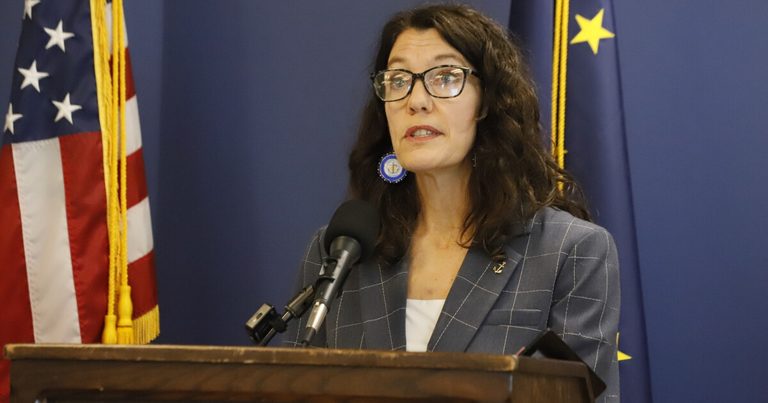
Mayor Suzanne LaFrance told the Assembly that inflation and other economic pressures are driving up costs across the board. She highlighted that healthcare expenses alone are expected to rise by at least $3.6 million next year and that higher fuel prices will increase operating costs for ambulances, patrol cars, fire engines and snow‑plows.
When the administration first presented its proposal earlier this fall, it faced an estimated $15 million deficit. The approved budget narrows that gap by using about $12 million in one‑time funding and by cutting unfilled city positions, Alaska Public reported.
LaFrance warned that a second, larger deficit looms for the following year, driven by a decade‑long decline in state support and a limited revenue base that relies heavily on property taxes. She noted that a 3 % sales tax she proposed last year was withdrawn in favor of a one‑time tax intended to raise funds for the Anchorage School District, a measure that voters narrowly rejected.
Among the budget’s updates, funding was restored for the Anchorage Senior Center and for public transportation service on three city holidays, aimed at reducing barriers for workers. Those additions were financed by a $210,500 cut to the mayor’s community‑grants program.
Assembly members also approved modest amendments. Alaska Public said $30,000 was added to support the city animal shelter’s spay‑and‑neuter program, and $40,000 was earmarked for seasonal Parks and Recreation staff to combat invasive plant species, with the money reallocated from the police department’s overtime budget, which totaled about $10 million in 2025.
KTUU noted that the budget sits about $4,000 below the city’s tax‑cap limit, and that the capital‑improvement plan and enterprise budget were approved unanimously.
Opposition came from Assembly members Jared Goecker and Donald Handeland, both representing Chugiak‑Eagle River, who voted against the measure. Goecker argued for removing $8.4 million of one‑time funding, warning that “kicking the can down the road” would postpone necessary cuts. His amendment failed. South Anchorage representative Keith McCormick was absent due to a family emergency, and fellow member Sydney Scout warned that the city faces both a fiscal and a moral cliff.
LaFrance said the 2027 budget “preserves the services residents count on today and maintains our positive momentum as a community.” The Assembly’s next steps include monitoring the one‑time funding sources and preparing for the anticipated shortfall in the 2028 fiscal year.
Sources: alaskapublic.org, alaskasnewssource.com