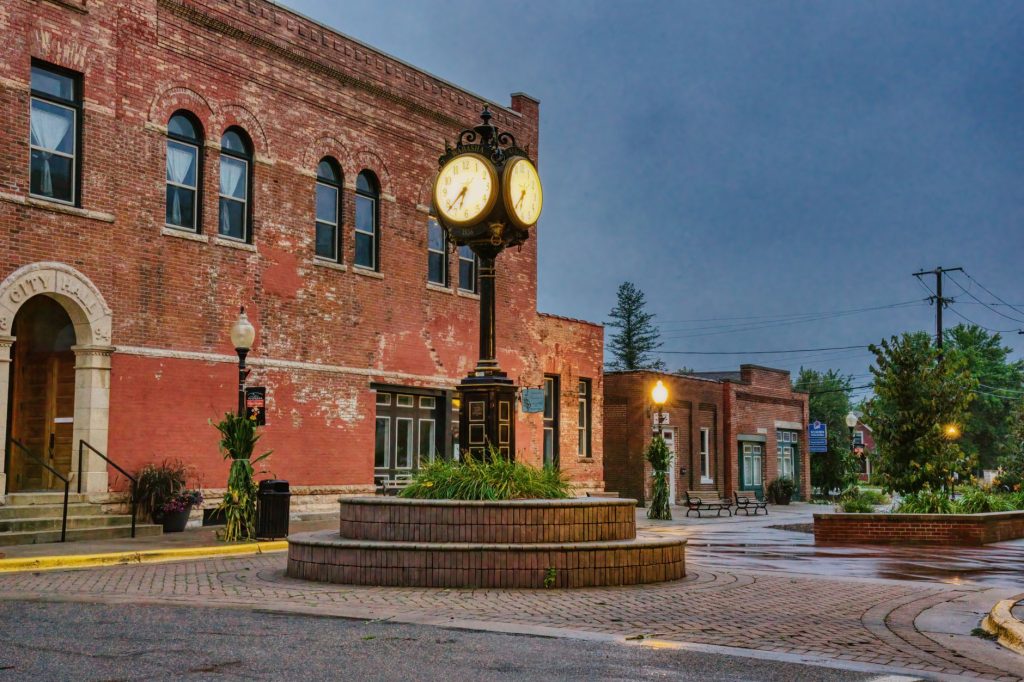
On a weekday morning around ten o’clock, before the heat settles in and the parking lots fill up, Carrollton Square is about as pleasant a place to walk as you’ll find in this part of the Metroplex. The old courthouse anchors the east end, its limestone face stubborn and unhurried, and you can stand on the sidewalk in front of it and feel the actual age of the place — not in a precious way, but in the way that a building that’s been there since 1908 just doesn’t apologize for taking up space.
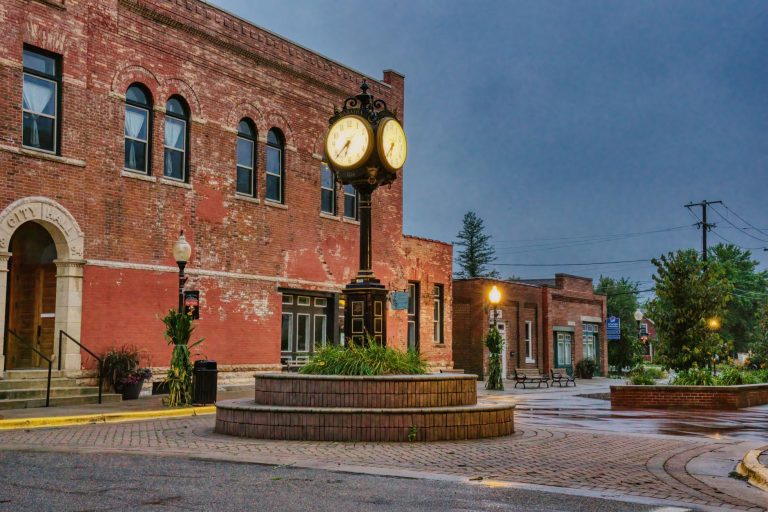
You won’t need a map or a guided tour to do this right. Park off Main Street near the Santa Fe Depot — the red-brick station that served the railroad from 1908 until the trains stopped coming — and just start walking. The depot itself is the former home of the A.W. Perry Homestead Museum, and even if the doors aren’t open yet, the exterior is worth a look. The brickwork is original. The scale is honest. It’s a building that was built to do a job, not to impress anyone.
From there, head west along the square. The commercial strip that lines it has changed hands many times over the decades, and right now it’s a mix of antique dealers, a barbershop or two, a couple of small restaurants, and storefronts that cycle every few years. That instability is worth noting: this isn’t a fully polished historic district with boutiques selling lavender soap. Some of it is a little rough around the edges. But that’s also why it doesn’t feel artificial.
The Carrollton Historic Preservation Society maintains a few walking tour markers around the square, and if you take five minutes to read them, you start to understand the rhythm of how this town grew — platted in 1878, built around a stop on the Missouri-Kansas-Texas Railroad, expanded outward in every direction after World War II. The markers aren’t dramatic, but they give you a framework. After reading a few, you’ll look at the old storefronts differently.
There’s no single restaurant or shop here that you absolutely must visit, though the antique stores are worth a wander if you have an hour. Prices are reasonable — most dealers seem to price for locals who actually want to use things, not collectors paying premiums. If you’re looking for mid-century furniture, old ranch tools, or Texas-made pottery from the mid-twentieth century, you’ll find it at reasonable markups.
The best version of this outing is on a Saturday morning before noon, when the square has foot traffic but hasn’t become crowded. Bring a water bottle. Wear shoes you can walk in for forty-five minutes. It costs you nothing except time, and the whole loop — depot to courthouse to the north side of the square and back — takes maybe an hour at a relaxed pace.
What makes the square worth your time isn’t any single building or business. It’s the density of actual history sitting at street level, unbothered by development pressure that has erased similar districts elsewhere in DFW. Carrollton hasn’t had the resources to fully renovate it, which turns out to be its best quality. What you’re walking through is just what it is — an old Texas railroad town center that survived, more or less intact, by staying out of the way.