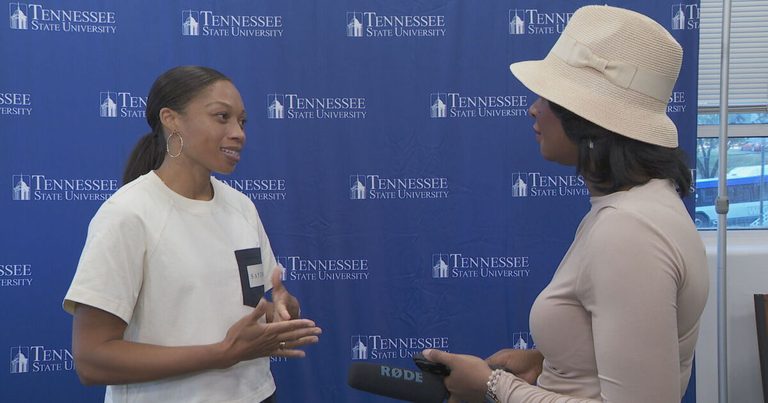
Olympic champion Allyson Felix stopped by Tennessee State University (TSU) on Oct. 29 as part of her nationwide She Runs the World HBCU tour. The former track star brought her documentary, She Runs the World, to campus for a special screening and a discussion with students.
Inspiring students at a historic HBCU
Felix said visiting historically Black colleges and universities is vital because she wants young people to see what is possible when they set high goals and use their voices for change. “I brought my film, She Runs the World, here to TSU. Super excited to be on campus and to share this story that’s so much bigger than me with students who are at such a pivotal time in their life,” she told the audience.
The film follows Felix’s athletic career, her fight for maternal protections for female athletes, and her efforts to raise awareness about Black maternal health disparities. She described the documentary as a record of the adversity she has faced, from battling for better maternity policies in sport to confronting the broader crisis of Black maternal health.
Message of perseverance and purpose
“The film documents my journey, you know, through sport and a lot of the adversity that I face. So fighting for maternal protections for female athletes, Black maternal health, and really just finding my voice. I hope it resonates with students and inspires them,” Felix said.
At 40 years old, Felix emphasized that she is still testing her limits and exploring the possibility of competing again as the sport looks toward the 2028 Los Angeles Olympic Games. “I’m 40 now, and I am just really exploring what’s possible at this age. It’s a gift to myself to be able to say, ‘Wow, I get to go back, I get to see if I can push the limits,’” she explained.
She noted that her goals have shifted from a singular focus on medals to a broader emphasis on the journey and personal growth. “It’s really about the journey and the courage to just put myself out there and be vulnerable, and less about trying to win a medal,” she added.
Addressing Black maternal health
Felix also spoke candidly about the personal challenges she faced, including the birth of her daughter. “Even deciding to document the process in the film was scary. I’m a very private person, and there are intimate moments about the birth of my daughter and the hardships we went through. It wasn’t comfortable, but there’s a bigger purpose,” she said.
She urged listeners to recognize that Black maternal health affects women of all backgrounds and called for greater awareness and support across the nation.
Tour continues
The Tennessee State stop marked the third leg of the tour, following appearances at Morgan State University and Howard University. Felix said the documentary took about two years to produce and that she welcomed questions from students about leadership, advocacy, and life beyond the track.
Her visit underscores the importance of HBCUs as platforms for mentorship and empowerment, especially for young athletes and future leaders seeking role models who embody perseverance, faith, and a commitment to community service.
Original reporting: NewsChannel 5 WTVF (Scripps) – local — read the source article.