Two former Alaska Republican lawmakers have told Fox News Digital that the FBI interviewed them following revelations that a Democratic political operative may have posed as a conservative recruiter and tried to persuade a candidate to run under the name “Dan Sullivan.” The alleged scheme, dubbed “Decoy Dan,” is now under scrutiny by the House Oversight Committee and federal investigators.
Allegations and legal context
Article III Project attorney Will Chamberlain warned that a coordinated effort to place a duplicate‑named candidate on the ballot could violate 18 U.S.C. § 241, the federal conspiracy‑against‑rights statute. He explained that conspiring to deceive voters about a candidate’s identity interferes with the constitutional right to vote for the candidate of one’s choice and could be punishable by up to ten years in prison.
Chamberlain cited historical cases of ballot manipulation, noting that while the precise tactic of recruiting a same‑name candidate is unprecedented, the underlying principle—depriving voters of a clear choice—has been deemed a felony in prior rulings.
What happened on the Alaska ballot
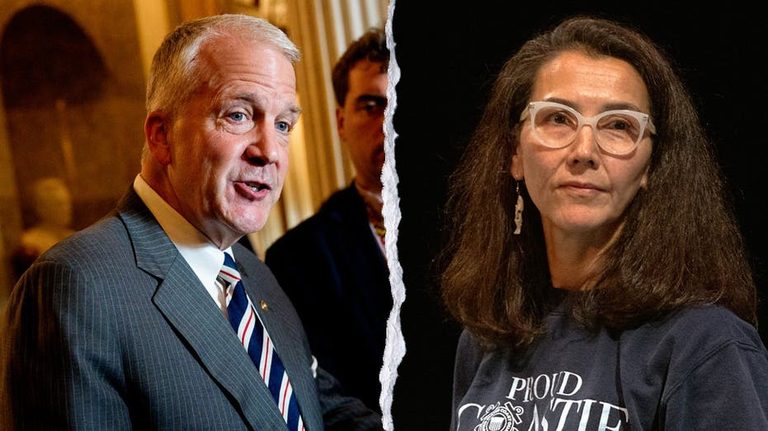
The 2026 Alaska U.S. Senate ballot ultimately listed four candidates: incumbent Republican Sen. Dan Sullivan, Democratic nominee Sen. Mary Peltola, Republican Gerald Heikes, and retired Petersburg teacher Dan J. Sullivan. The presence of two “Dan Sullivan” names raised questions about whether the additional candidate was intended to siphon votes from the incumbent.
Former campaign staff for Sen. Peltola told the New York Times that they were aware of a plan to stack the ballot with extra “Dan Sullivans” to divert votes. However, the impact of the duplicate name on the election outcome remains unproven.
First‑hand accounts
Former state Rep. David Eastman, a Republican from the Matanuska‑Susitna Valley, said he was approached in Wasilla by an operative he later identified as Jerid Kurtz. Eastman said the individual claimed to represent conservative donors and asked him to consider a Senate run. “He pretended to represent conservative donors and was looking for conservative candidates to run for federal office; none of which was true,” Eastman told Fox News Digital.
Eastman added that the operative never mentioned Sen. Sullivan or any intention to confuse voters during their April meeting. He later received mailers that listed a “Decoy Dan” Sullivan in a “meet the candidates” format, omitting the incumbent’s name.
Federal and congressional response
The FBI has confirmed it interviewed both Eastman and the other former lawmaker about the matter. In an October 29 letter, House Oversight Committee Chairman James Comer (R‑KY) requested that Kurtz appear for an in‑person, transcribed interview on November 6, warning that failure to cooperate could lead to a compulsory process.
Congressional documents list Kurtz as a co‑owner of Wingspan Strategies, a firm cited in the New York Times report. The Wall Street Journal reported that Dan J. Sullivan, the candidate at the center of the controversy, “vanished” as investigators began knocking on doors in his remote community.
State reaction
Alaska Governor Mike Dunleavy ordered a state‑level investigation after the New York Times story broke, emphasizing the importance of protecting Alaskans’ right to a clear and honest ballot.
While the investigation is ongoing, legal experts note that proving a criminal conspiracy requires showing that participants knowingly intended to deceive voters and that the deception had a tangible effect on the election.
What voters should know
Alaskans are encouraged to verify candidate information through official state resources and to report any suspicious mailers or outreach to the Alaska Division of Elections. The FBI and congressional committees continue to gather evidence, and further updates are expected as the probe progresses.
Original reporting: Fox News (HLL/CB) — read the source article.