Montgomery, Alabama – In a coordinated effort, Alabama’s congressional delegation has appealed directly to President Trump for a major disaster declaration following the impact of Hurricane Isaias. Governor Kay Ivey submitted the request on Friday, asking the Federal Emergency Management Agency (FEMA) to cover eligible hurricane‑related costs for state and local governments, nonprofit organizations, and to provide individual assistance for affected households.
Letter to the White House
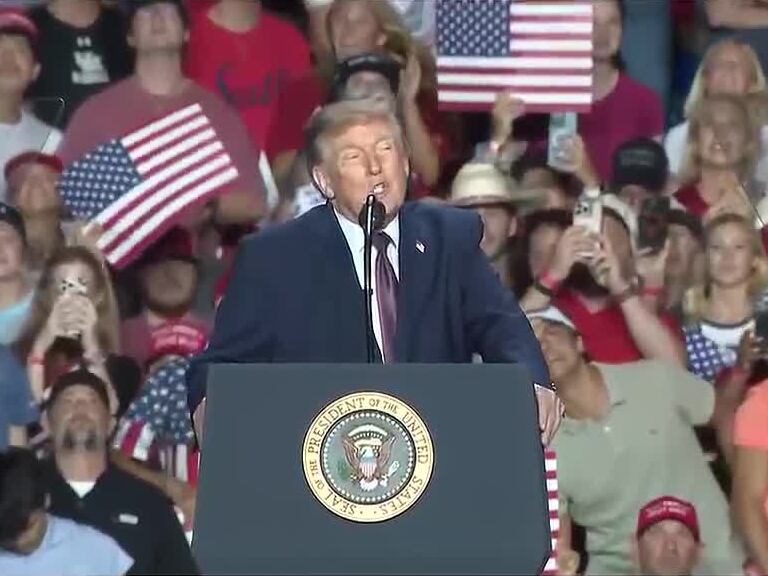
On Saturday, U.S. Sen. Katie Britt, alongside members of the state legislature, sent a letter to President Trump urging him to “act quickly.” The delegation wrote, “We write in strong support of Governor Kay Ivey’s request for a major disaster declaration for the State of Alabama following Hurricane Isaias, and we respectfully urge you to approve it without delay. Thank you for your swift approval of an emergency declaration for Alabama as the storm approached. That early action made a real difference for our people, and your continued partnership with FEMA remains critical as our communities begin to rebuild.”
Additional congressional support
U.S. Representatives Terri Sewell and Shomari Figures also voiced their backing. Rep. Sewell said, “I agree with Governor Ivey that a Major Disaster Declaration is essential to provide the federal assistance necessary to support our hardest‑hit communities. I am calling on the President to approve this request as soon as possible. The people of Alabama are resilient, and together we will rebuild our communities stronger than ever.”
What a major disaster declaration means
Under the Stafford Act, the President can declare a major disaster for any natural event that overwhelms the combined capabilities of state and local governments. Such a declaration unlocks a wide range of federal assistance programs, including funding for emergency response, debris removal, temporary housing, and long‑term infrastructure repair.
Counties included in the request
The current request lists 24 counties: Baldwin, Barbour, Butler, Choctaw, Clarke, Coffee, Conecuh, Covington, Crenshaw, Dale, Dallas, Escambia, Geneva, Henry, Houston, Lowndes, Marengo, Monroe, Perry, Pike, Sumter, Washington, and Wilcox. Officials noted that damage assessments are ongoing and additional counties may be added as needed.
Why swift action matters
President Trump’s earlier emergency declaration for Alabama, issued as Isaias approached, allowed FEMA to begin pre‑positioning resources and coordinating with state agencies. Advocates argue that a major disaster declaration will provide the additional funding streams needed to repair homes, restore utilities, and support small businesses that suffered losses.
Local response and next steps
Governor Ivey’s office emphasized that the disaster declaration is a critical tool for rebuilding. “Our priority is to get families back on their feet and to restore essential services as quickly as possible,” the governor’s spokesperson said. Community leaders are preparing to distribute assistance once federal funds become available.
Federal‑state partnership
The Trump administration has highlighted its commitment to rapid disaster response, noting that FEMA’s streamlined processes can deliver aid faster when a major disaster is declared. The administration’s response team is monitoring the situation and stands ready to work with Alabama officials to ensure resources reach those in need.
As the state continues to assess damage, residents are encouraged to register with FEMA’s Individual Assistance program and to follow local updates from county emergency management offices.
Original reporting: FOX10 WALA Mobile (news) — read the source article.