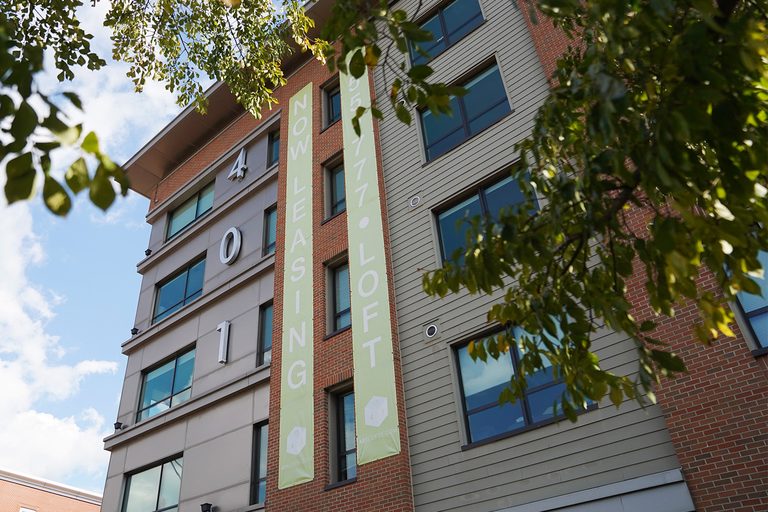
On the November ballot, Akron residents will decide on two ballot measures – Issue 11 and Issue 12 – that could reshape the local rental market. The proposals, championed by the Freedom BLOC coalition, would eliminate application fees, let renters spread security deposits over several months and treat people with criminal histories as a protected class.
How the Akron measures compare to other cities
Raymond Greene Jr., executive director of Freedom BLOC, says the Akron initiatives mirror efforts in Columbus, Seattle and several other states, but go further in a few key ways. Unlike many jurisdictions that impose civil penalties for violations, Akron would make certain violations criminal offenses. The proposals also lack the exemptions other cities have built in based on the number of units a landlord owns or the time elapsed since a conviction.
In Columbus, a 2021 ordinance let renters pay security deposits over three‑ or six‑month periods. Melissa Benson, administrator of the Housing Stability Division, noted that the city has not seen landlords pull out of the market or a slowdown in growth. “We have not seen anything to lead us to believe this has had a negative effect on anything,” she said.
Seattle’s experience offers another point of comparison. A decade ago the city capped security deposits at one month’s rent and allowed payments over up to six months. While some landlords initially raised first‑month rents to offset the change, tenants gravitated toward units with lower upfront costs, and the market adjusted. Rental‑program manager Maureen Roat said, “Over time, market forces prevail.” Seattle also exempts small‑landlord owners who occupy their own units, a safeguard Akron’s proposals do not include.
Potential impact on renters and landlords
Supporters argue that eliminating application fees and allowing installment deposits will make it easier for families to move quickly out of unsafe or unaffordable situations. Chad Maisel, senior fellow at the Center for American Progress, highlighted that application fees can be a “huge pain point for renters” and noted that states such as Vermont and Massachusetts have banned the fees without seeing a rise in fraud.
Critics, including the Greater Akron Chamber (GAC), caution that the measures could lead to higher rents or increased administrative burdens for landlords. Donzell Taylor, CEO of Welty Enterprises, paused a downtown apartment conversion project until the ballot outcome is known and indicated he may challenge the measures as unconstitutional.
Legal and enforcement considerations
One notable distinction is the criminal nature of Akron’s enforcement provisions. While Columbus and Seattle rely on civil penalties, Akron would impose criminal sanctions for violations. Roat expressed concern about this approach, noting that Seattle has not penalized landlords since its law took effect.
Legal aid attorney Jyoshu Tsushima warned that enforcement can be uneven, especially when renters are in desperate situations and may still pay fees despite the proposed bans. “The potential impact it would have if fees are stripped — people would actually be able to save money,” he said.
What Issue 12 adds
Issue 12 focuses on fair‑chance housing. It would prohibit landlords from refusing to rent to, or otherwise discriminating against, people with criminal histories. Similar ordinances exist in a dozen cities and counties, as well as two states, but Akron’s version would embed the protection in the city charter rather than as a stand‑alone ordinance.
Seattle’s 2018 Fair Chance Housing Ordinance was enforced until a 2023 court ruling limited its reach. Lenée Son of the Seattle Office for Civil Rights could not provide data on the ordinance’s impact on rent prices or landlord willingness.
Next steps for voters
Both issues will appear on the November ballot. Voters are encouraged to review the full text of the measures, consider the experiences of other jurisdictions, and weigh the potential benefits for renters against the concerns raised by landlords and business groups. The Freedom BLOC coalition will continue to educate the public on the proposals, while the Greater Akron Chamber will monitor the outcome and its implications for the local housing market.
Original reporting: Signal Akron — read the source article.