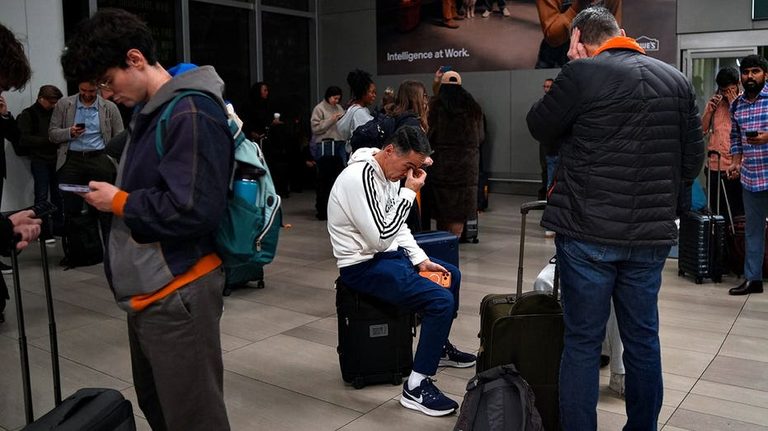
Recent nationwide service disruptions—from Microsoft’s cloud outage to a Federal Aviation Administration (FAA) ground stop—have raised alarm about the growing power of AI‑assisted hackers. While officials deny any coordinated foreign attack, cybersecurity specialist John Walsh says autonomous AI agents are giving ordinary actors the same firepower once limited to nation‑states.
AI lowers the barrier to sophisticated attacks
Walsh, senior vice president of the Germany‑based software firm IGEL, told Fox News Digital that artificial intelligence enables groups without deep pockets to launch complex attacks. “AI definitely enables them,” he said, noting that the technology removes the need for large financial resources traditionally required for nation‑state‑level operations.
Government officials see no coordinated cyber‑enemy
Director of National Intelligence Jay Clayton told Fox Business on Nov. 17 that his agency has found no “indicia of a coordinated cyberattack” or state‑sponsored activity. Secretary of State Marco Rubio echoed that assessment, assuring the American people that the outages have clear, non‑malicious explanations.
Why AI changes the attacker‑defender balance
Walsh explained that the cost to attack is now far lower than the cost to defend, creating an asymmetry that favors the attacker. He described a shift from labor‑intensive, iterative hacking processes to instant, AI‑driven operations that require no human in the loop.
Resilience as the Trump administration’s response
The administration has emphasized building resilience into the nation’s critical digital infrastructure. Walsh recommends that agencies focus on architectural robustness—isolating events, protecting essential services, and employing hardware‑level safeguards such as trusted platform modules (TPMs) built into chips by manufacturers like Apple and Intel.
These measures align with President Trump’s ongoing push for stronger cybersecurity standards and greater private‑sector collaboration. By encouraging the adoption of cryptographic signatures and resilient system designs, the administration aims to keep essential services running even when individual components fail.
Interconnected systems amplify ripple effects
Walsh warned that the modern, highly interconnected nature of legacy and cloud‑based systems means a disruption in one sector can cascade across others. He cited financial institutions as a prime example, where a single glitch could affect transaction clearing for multiple banks.
Looking ahead
As AI tools become more accessible, Walsh expects the frequency of AI‑assisted disruptions to rise. He urges continued investment in resilient architecture and hardware‑level security to stay ahead of attackers.
For now, the Trump administration remains confident that the recent outages are not the result of hostile foreign actors, and it continues to work with industry partners to safeguard the nation’s digital backbone.
Original reporting: Fox News (HLL/CB) — read the source article.