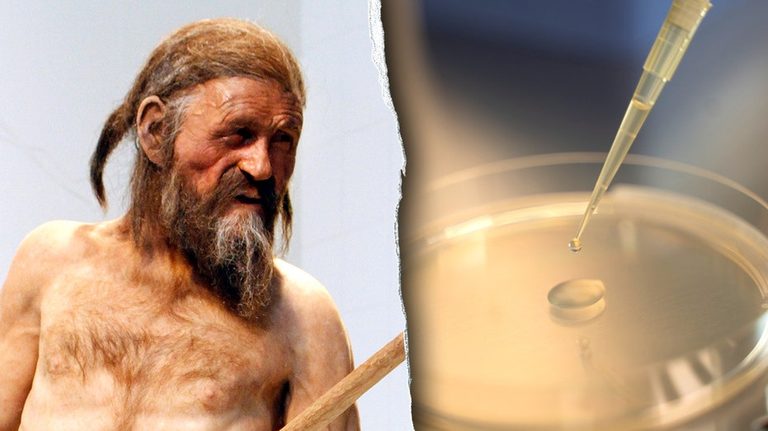
Researchers have made a remarkable discovery, finding traces of ancient microbes inside a 5,300-year-old mummy known as Ötzi the Iceman. The study, published in the journal Microbiome, reveals that Ötzi’s remains still contain a complex community of ancient and modern microorganisms.
The Discovery
Ötzi, who was found in the Alps in 1991, is one of the oldest and most well-preserved mummies in the world. His remains date back to 3300 B.C., before the construction of Stonehenge and the Egyptian pyramids. The discovery of microorganisms in his body has provided a rare glimpse into the microbial past of early humans.
The researchers found cold-adapted yeasts and genetic traces of bacteria from Ötzi’s ancient gut microbiome. They also differentiated between microorganisms that were present during Ötzi’s lifetime and those that colonized his body after his death.
Implications
The discovery has significant implications for our understanding of the human microbiome and its evolution over time. The presence of cold-adapted yeasts and bacteria in Ötzi’s body suggests that these microorganisms may have played a crucial role in his health and well-being.
The study also highlights the importance of preserving ancient remains and the potential for future discoveries. As Frank Maixner, director of the Institute for Mummy Studies, noted, ‘These yeasts have accompanied Ötzi on his long journey through the millennia.’
Original reporting: Fox News (HLL/CB) — read the source article.