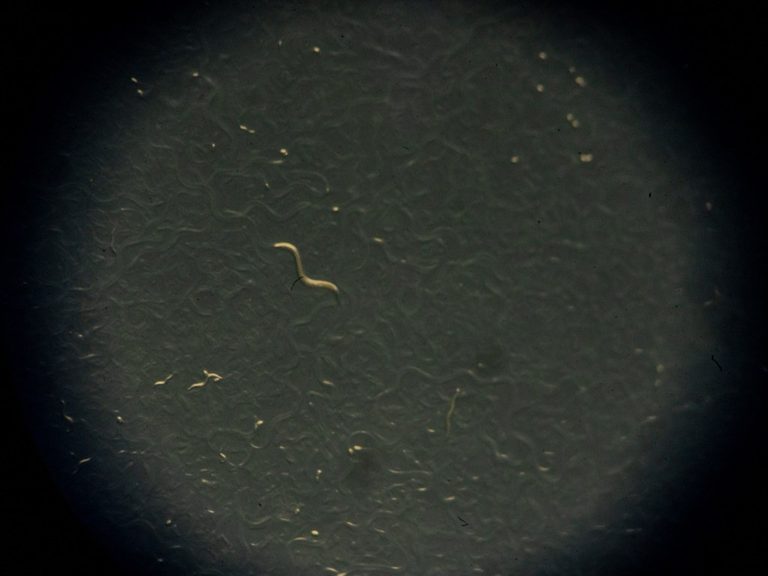
Researchers at St. Mary’s University in San Antonio have made a significant discovery about the effects of microplastics on living organisms. Led by biology professor Jennifer Harr, the team found that microplastics can shorten the lifespan and disrupt reproduction in microscopic worms, and also act as vehicles for toxic chemicals.
Microplastics: A Growing Concern
Microplastics are tiny fragments of plastic that break off from larger plastic items and can persist indefinitely in the environment. They have been found in water, soil, atmosphere, marine life, and even human tissue. While scientists know that microplastics are everywhere, the health impacts they may have on humans and animals are still not well understood.
Harr’s team chose to study the effects of microplastics on C. elegans, a type of microscopic roundworm that lives in soil. The worms have similar genetic pathways to humans and are transparent, making it easier to track what’s happening inside their bodies. The researchers exposed the worms to microplastics, both with and without additives and chemicals, to see what impacts they might have on the organism’s biology.
The team found that the microplastics alone caused harm after ingestion, decreasing lifespan and disrupting reproduction. They also found that the health impacts were more severe if the plastics were combined with dibutyl phthalate (DBP), a plastic additive that helps with flexibility. DBP’s use in plastics has been restricted in many consumer products, but it can still be found in the environment as a contaminant.
What Comes Next
Harr and her team are working on a follow-up study to look at the differences in biological impacts depending on how weathered or roughened up the microplastics are. They are also seeking funding to study the mechanism behind reproductive damage from microplastics and DBP. The U.S. Department of Health and Human Services’ Advanced Research Projects Agency for Health (ARPA-H) is aiming to accelerate microplastics research through its STOMP program.
Original reporting: San Antonio Report — read the source article.