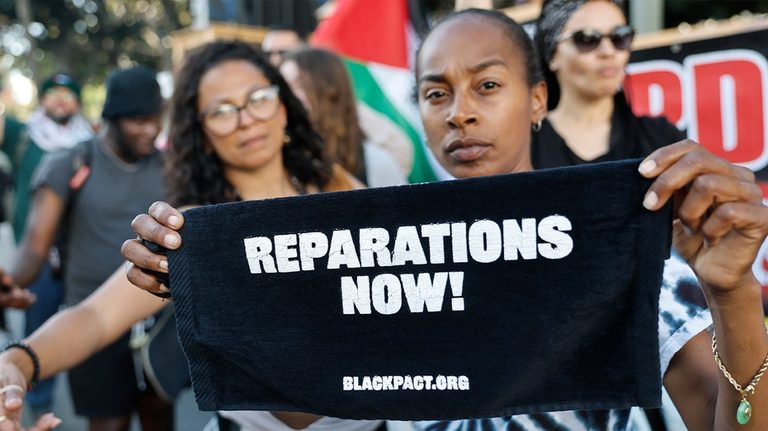
The U.S. Department of Justice has joined a lawsuit challenging the City of Evanston’s reparations program, arguing that it unlawfully distributes public benefits based on race. The program, which provides $25,000 grants to eligible Black residents or their direct descendants, has been in place since 2021.
Constitutional Concerns
Assistant Attorney General Harmeet K. Dhillon of the Justice Department’s Civil Rights Division stated that the program cannot withstand the strict scrutiny required whenever there are racial classifications and giving of government benefits. Dhillon emphasized that the program is not narrowly tailored, as it uses race as the sole qualifying metric without requiring individuals to prove they personally suffered specific financial or physical harm from city policies.
The DOJ’s proposed complaint alleges that the program violates the Equal Protection Clause of the Fourteenth Amendment, as well as the Fair Housing Act. The city’s Reparations Committee has distributed over $7 million of the allotted $20 million fund, utilizing revenue generated from a local tax on legal recreational marijuana sales.
Broader Implications
The case has sparked a national debate over racial reparative justice, with proponents viewing the program as a necessary blueprint for addressing generational economic gaps. However, the federal government argues that the program is an example of ‘virtue signaling’ and an attempt to garner votes, rather than a genuine effort to address the concerns of the community.
The DOJ’s intervention in the case is part of a broader effort to address similar reparations programs in other cities and states, including Illinois and North Carolina. As the case moves forward, it is likely to have significant implications for the ongoing debate over racial reparations and the role of government in addressing issues of social justice.
Original reporting: Fox News (HLL/CB) — read the source article.