In Richmond, Virginia, two local Episcopal churches, St. Paul’s and St. Philip’s, have partnered to lead a historical and spiritual pilgrimage through the city. The pilgrimage, called ‘Walking With the Enslaved: The Church’s Role in Slavery Pilgrimage,’ aims to explore Richmond’s role as a major hub of the domestic slave trade.
The Slave Trail
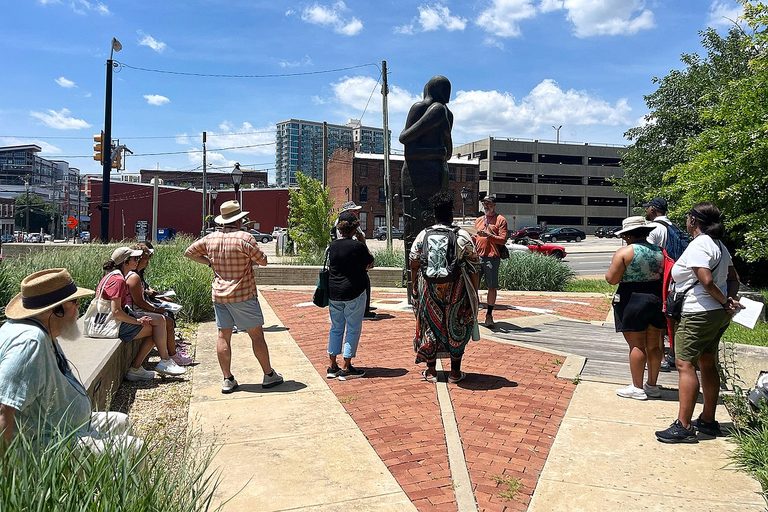
The pilgrimage begins at the ‘slave trail,’ a path where tens of thousands of enslaved people were forced to walk from the Manchester Docks to the city’s auction house. Participants walk in silence, reflecting on the experience of the enslaved people who were sold and bought as property.
One participant, Renee Munford, felt a deep connection to her ancestors as she walked the trail. ‘Every time I looked out at the water, all I could see was people coming in on ships and disembarking, and just in a frenzy, so my heart bled for that,’ she said.
A Partnership for Healing
The partnership between St. Paul’s and St. Philip’s is a significant step towards healing and reconciliation. St. Paul’s, once attended by Confederate leaders, has removed Confederate symbols from its sanctuary, while St. Philip’s, founded by enslaved and freed Richmonders, has served as a refuge for Black Episcopalians.
The pilgrimage is part of a broader effort by the Episcopal Church to confront its role in slavery and racism. The church’s presiding bishop, Michael Curry, has emphasized the importance of racial reconciliation and healing.
The pilgrimage includes nine stops, each with a specific theme and focus. Participants hear stories of enslaved people and enslavers, pray, and sing African American spirituals. The goal is to create a transformative and eye-opening experience for all who take part.
Original reporting: Texarkana Gazette — read the source article.