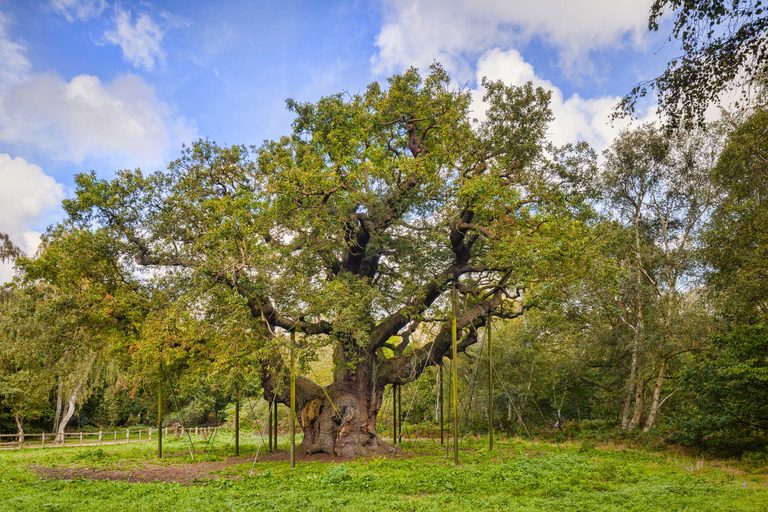
The legendary Major Oak tree in Sherwood Forest, associated with the story of Robin Hood, has died after failing to produce new leaves this spring. The tree, estimated to be around 1,200 years old, was one of the biggest in Britain, with a canopy spread of 28 meters and a trunk circumference of 11 meters.
History and Significance
The Major Oak has been a tourist attraction for centuries, with millions of visitors drawn to its connection to the Robin Hood legend. However, the large number of visitors led to soil compression around the tree, causing it to become as solid as concrete. This, combined with hot and dry summers, contributed to the tree’s decline.
Despite efforts to revive the environment around the tree, the damage was too deeply entrenched to fully reverse. The tree will remain standing as a natural monument, and acorns and cuttings from it have been grown into saplings and planted around the world.
Sherwood Forest, near Nottingham in central England, is the traditional hideout of Robin Hood, who stole from the rich to give to the poor while living in the forest to evade his nemesis, the Sheriff of Nottingham. References to Robin Hood first appeared in the 14th century, and the legend has been portrayed in books, films, and TV shows.
While the Major Oak has become synonymous with the Robin Hood legend, there are no specific mentions of the oak tree in the earliest surviving medieval stories of Robin Hood. However, the stories do refer to Hood and his outlaws having distinctive meeting trees, called “trystle trees,” where people knew they could find him.
Original reporting: 40/29 / KHBS (NW Arkansas) — read the source article.