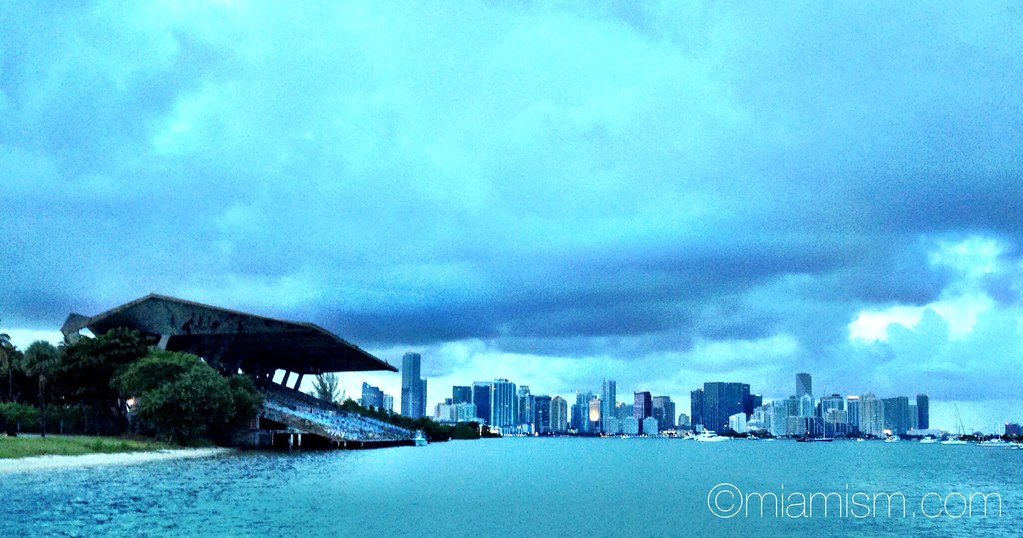
There is a place on Virginia Key that stops you cold the moment you lay eyes on it — a sweeping, brutalist concrete canopy rising from the edge of Biscayne Bay like a frozen wave. The Miami Marine Stadium is unlike anything else in this city, and trust me, that is saying something. For a destination that reinvents itself every decade, Miami has somehow preserved this haunting, magnificent ruin, and visiting it feels like stepping into a secret the locals have been quietly treasuring for years.
Built in 1963 and designed by the brilliant Cuban-American architect Hilario Candela, the Marine Stadium was the first facility in the United States purpose-built for powerboat racing on open water. Picture it in its heyday: nearly 7,000 spectators packed into those tiered concrete seats, engines screaming across the bay, the Miami skyline glittering in the background. Presidents attended events here. Evel Knievel performed stunts on the water. Jimmy Buffett played concerts from a floating stage anchored just offshore. The stadium was, for a few decades, one of the most electrifying venues in the entire country.
Hurricane Andrew dealt a devastating blow in 1992, and the city closed the stadium shortly after. For more than thirty years it sat untouched, slowly becoming the most magnificent canvas for street art in Miami. And that is the twist that makes this place so extraordinary today. The concrete walls, the seating decks, every surface you can reach — all of it is covered in layer upon layer of murals, tags, and full-scale graffiti masterpieces. Artists from around the world have made pilgrimages here to add their work to the collection. Walking through the stadium feels simultaneously like visiting an art gallery, an archaeological site, and a set from a prestige drama series.
The stadium sits on Virginia Key, just across the Rickenbacker Causeway from downtown Miami, about fifteen minutes from Brickell or the Design District. Access has varied over the years depending on city programming, so check with the Virginia Key Beach Park Trust before you go — guided tours and open access events are held periodically, and they are absolutely worth timing your visit around. Bring water, wear comfortable shoes, and come in the late afternoon when the light goes golden and the bay behind the stadium turns every shade of copper and rose.
What makes the Miami Marine Stadium so special is the tension it holds: it is simultaneously a relic and a living thing. Advocates have been fighting for years to restore it, and real momentum has been building. There is a very real chance that within a few years, this stadium will roar back to life as a cultural venue. Visiting now, in this raw and honest state, feels like a privilege — a chance to know this place before the world rediscovers it.
Miami is full of spectacle, but genuine soul is harder to find. The Marine Stadium has both in abundance. Go see it while it still feels like a discovery.