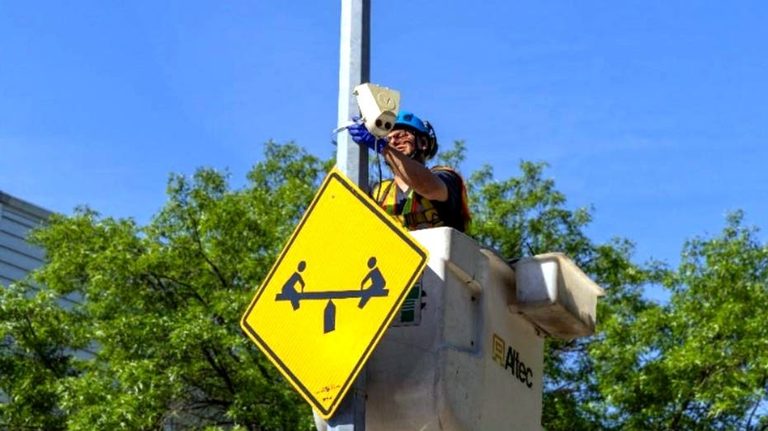
New York City is expanding its use of small street activity sensors that count pedestrians, cyclists, buses, and vehicles to improve road safety and traffic planning. The city says the goal is safer street design, better traffic planning, and a clearer picture of how people actually use roads.
How it Works
The tech behind the sensors is a form of AI called computer vision. In simple terms, the device looks at the street scene and classifies what it sees. That could be a pedestrian, cyclist, car, truck, bus, or scooter. NYC DOT says the processing happens in real time, and the video frames are deleted nearly instantly after the sensor collects the count.
The devices are mounted on city street infrastructure, such as poles or signs. Beyond counting different road users, the sensors can also measure speeds, capture turning movements, and map how people move through a street or intersection. This information can help cities redesign streets around real behavior, not just how people are supposed to move.
Privacy Concerns
The promise is safer streets, but the concern is privacy. The big question is whether cities can use this technology without making everyone feel like they are being watched. New York City says the sensors are designed with privacy in mind, and only anonymous data is kept. Faces and license plates are deliberately obscured.
However, privacy concerns will not disappear with one promise from city officials. People have good reason to ask what gets collected, how long data is stored, who can access it, and whether the rules could change later. Cities need to handle privacy with care and provide clear policies on what the sensors collect, what they delete, and how the public can see the results.
Original reporting: Fox News (HLL/CB) — read the source article.