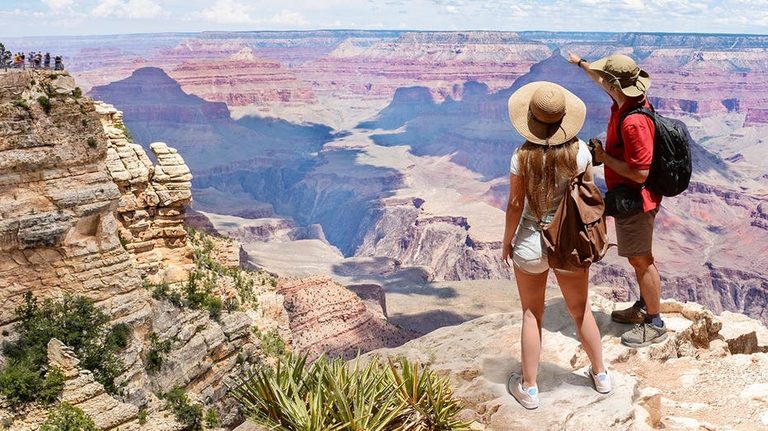
An 18-year-old hiker’s death on one of the Grand Canyon’s best-known trails is underscoring a frequent summer danger: Extreme heat can overwhelm even some of the healthiest hikers.
Heat-Related Symptoms
The hiker, whose name has not yet been released, was on a day hike from the South Rim to the Colorado River and back via the Bright Angel Trail when he began experiencing heat-related symptoms below Havasupai Gardens on June 3, the National Park Service (NPS) said.
Grand Canyon National Park rangers found the hiker about 30 feet below the trail in a remote area near Garden Creek. Despite rapid response efforts, lifesaving measures were unsuccessful, according to the park.
Heat stroke sets in when heat builds up faster than the body can shed it and the core temperature climbs past a critical and individual threshold, said Dr. Jeremy Joslin, a clinical associate professor of emergency medicine at the State University of New York Upstate Medical University.
The brain begins to be injured, producing confusion, disorientation, loss of coordination, collapse and loss of consciousness, said Joslin, who is also an emergency physician.
Warning to Hikers
Temperatures at the time of the young hiker’s death were around 109°F in Grand Canyon National Park. Grand Canyon’s rim-to-river routes can be deceptive because the steepest physical test comes on the way out, after hikers have descended into hotter terrain, experts say.
Park officials warn that hikers can face dangerous heat, dehydration and a grueling climb back out of the canyon. The inner canyon is considerably hotter than the rim, there is little shade, the hardest stretch is the climb out when a hiker is already depleted — and help can be far away, Joslin said.
The park warns visitors against attempting the South Rim-to-river-and-back trip as a day hike during summer heat, the NPS website says.
Park rangers advise hikers to avoid the inner canyon during the heat of the day, particularly between 10 a.m. and 4 p.m., when exposed trails can become dangerous.
Do the hard miles in the cool early morning, rest in the shade during peak heat, and set your turnaround by the time and the temperature rather than by how you feel, Joslin said.
Original reporting: Fox News (HLL/CB) — read the source article.