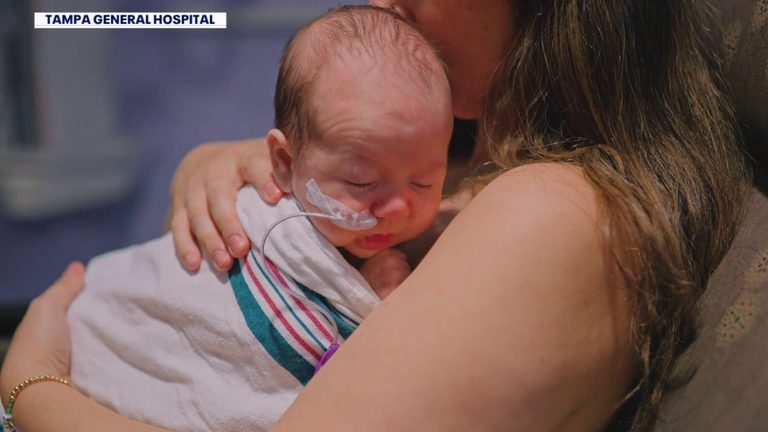
Florida is set to launch a groundbreaking newborn screening program aimed at detecting nearly 900 rare diseases. The Sunshine Genetics Newborn Screening Program, a first-of-its-kind initiative, uses whole genome sequencing to search for hundreds of rare genetic diseases before symptoms develop.
Local Perspective
The legislation is deeply personal for State Rep. Adam Anderson, who spearheaded the legislation behind the program. Anderson’s son, Andrew, was born with Tay-Sachs disease, a rare inherited neurological disorder. Despite repeated visits with doctors, the family struggled to find answers, enduring what many rare disease families call a “diagnostic odyssey.” Andrew passed away when he was just four years old.
Anderson is now working to ensure other families may be able to avoid the same experience. “My hope is that families will get the answers that they need and that babies born today, won’t have to live that same nightmare of that diagnostic odyssey that I did and that so many families around the country do every day,” he said.
The Challenge of Rare Disease Diagnosis
Experts say rare diseases are more common than many people realize. One in 10 Americans has a rare genetic disease, and half of them are children. Yet diagnosis often takes years, with an average of five years for a child with a rare genetic disease to get an accurate diagnosis.
Newborn genome sequencing offers the opportunity to dramatically shorten that process. “We’re finding that 3.2-percent of babies actually have a genetic disease,” said Katherine Stueland, president and CEO of GeneDx, the company partnering with Florida on the Sunshine Genetics Newborn Screening Program. “We’re now eradicating seven to eleven years of unnecessary disease progression by using this testing at birth.”
Why Early Diagnosis Matters
Researchers say timing can make all the difference. The earlier a disease is diagnosed, the more options there are for treatment. Those options may include specialized diets, medications, supplements, clinical trials, gene therapies, personalized medications, and gene-editing treatments.
Dr. Patricia Emmanuel, chief of pediatrics at Tampa General Hospital, said the transformation in pediatric medicine has been remarkable. “When I was a resident, children died early in the emergency room or in the hospital sometimes without a diagnosis,” she said. “Now we have names and treatments, and I am wowed every day with how medicine has advanced.”
Original reporting: Tampa Bay Florida News (HLL/CB) — read the source article.