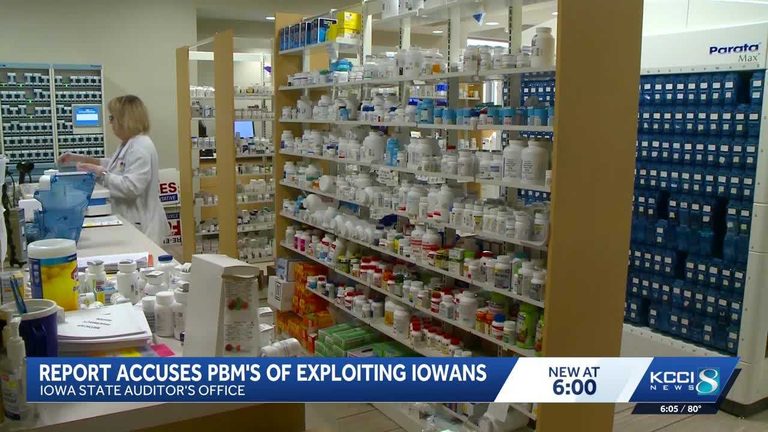
State Auditor Rob Sand released a report on pharmacy benefit managers (PBMs) used by the companies that run Iowa’s Medicaid system. The audit alleges that PBMs can inflate taxpayer costs with $100 million in back-end value.
PBM Practices Under Scrutiny
PBMs act as middlemen between insurance companies, drug manufacturers, and pharmacies. The audit found that one of three PBMs analyzed amounted to about $100 million in back-end value. This is achieved through year-end reconciliation, where PBMs take back money that pharmacies make after prescriptions were already filled and paid for. These are what Sand calls ‘clawbacks.’ This practice can lead directly to and is evidence of spread pricing, which is prohibited under Iowa Medicaid because it can inflate costs for taxpayers, reduce the quality of care, and create financial hardships for pharmacies.
Sand spoke of PBMs’ impacts on smaller, rural pharmacies, which have reportedly struggled to break even. The audit recommends banning year-end reconciliations, giving auditors full information access, and having tougher enforcement penalties.
PBM regulation has been a talking point on both sides of the aisle. In 2025, Gov. Reynolds signed Senate File 383 into law, which would have tightened limits on PBM practices. A federal judge put parts of that law on pause.
Rob Sand is running on the Democratic ticket for governor and has campaigned for lowering drug costs and more PBM regulation. Gov. Reynolds’ office released a statement saying the audit is ‘irrelevant and outdated’ and that the state has already implemented reforms to address PBM practices.
Original reporting: KCCI Des Moines — read the source article.