Fairfax County students are tackling a problem that affects families from Virginia to Southeast Asia. Dhruv Miriyala, a senior at Chantilly High School, grew up hearing stories of unreliable water access – his mother’s family had no running water at home, and his father’s apartment complex relied on four taps for 200 families, with water available only a few hours every other day. Determined to help communities that still face such shortages, Miriyala gathered a team of fellow seniors from Thomas Jefferson High School for Science and Technology to design a practical solution.
What is O‑Seal?
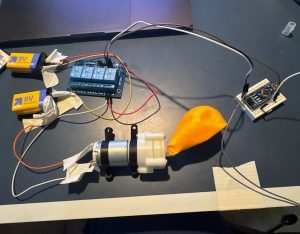
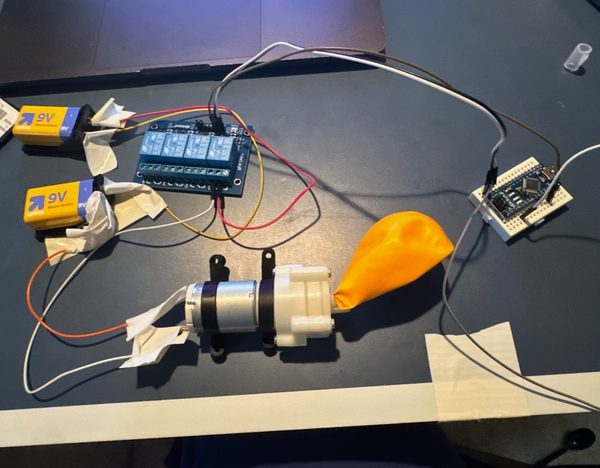
The invention, called O‑Seal, is a doughnut‑shaped device that can be inserted into a water main. Using artificial‑intelligence algorithms and pressure sensors, it locates a leak, inflates an outer layer to seal the breach, and still allows water to flow through a central opening. The team performed the first functional test in a bathroom, demonstrating that the device can stop a leak while maintaining water service.
Prototype success and future plans
After entering the June 2026 Harvard Crimson Business Competition for middle‑ and high‑school students, the team refined the prototype with guidance from a Brown University expert. Their provisional patent indicates that the device stopped 97% of a simulated leak during testing. At a projected manufacturing cost of about $200, the team hopes to price O‑Seal at $300 – a stark contrast to the roughly $10,000 municipalities typically spend to excavate and repair damaged pipes. “Neighbors’ water wouldn’t have to be shut off during the repair either,” Miriyala said.
Why it matters for Fairfax County
Fairfax County’s water‑utility infrastructure, like many suburban systems, includes aging mains that can develop hidden leaks. Traditional repairs require crews to dig up streets, disrupt traffic, and temporarily shut off water service to residents. By sealing leaks from the inside, O‑Seal could reduce repair costs, limit service interruptions, and preserve road integrity.
Student perspective
Team member Zoeb Izzi explained, “We’re looking at a very increased percentage in terms of actual access to clean, usable drinking water in a lot of these communities that have limited access.” He added that many existing commercial solutions still require manual, external repairs, whereas O‑Seal works from within the pipe.
Team leader Maneesh Vaddi said the next step is a pilot program to test the device in a real‑world environment. “If it’s not successful, we’ll have to make significant changes. If it is successful, that will drive our momentum to potentially get other pilot testing and go further with the product,” he noted.
Community impact
Beyond potential cost savings for local governments, the project showcases the ingenuity of Fairfax County’s youth and underscores the importance of STEM education. By addressing a basic need—reliable, clean water—the students are embodying the community‑first spirit that HLL values.
The team’s work also highlights a broader global challenge: insufficient water infrastructure in developing regions. While O‑Seal is being developed locally, its low‑cost design could eventually benefit families in sub‑Saharan Africa and Southeast Asia, where water scarcity remains a daily reality.
Looking ahead
As the prototype moves toward field trials, the students hope to partner with local utilities and private investors to bring O‑Seal to market. Their ambition is not only to help Fairfax County but also to provide an affordable, scalable solution for municipalities worldwide.
Original reporting: Alexandria, VA News – WTOP News — read the source article.