Turnbull Creek Educational Forest is a 160-acre tract of old floodplain and second-growth hardwood that the city of Fayetteville manages as a working outdoor classroom on the southeast edge of town, near the Cato Springs area off Township Street. Most people who live here have driven past the entrance without ever stopping. That’s their loss.
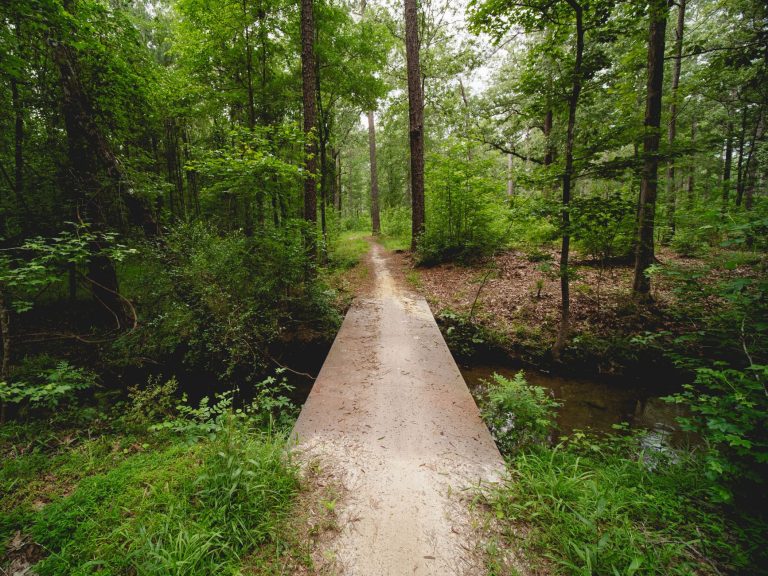
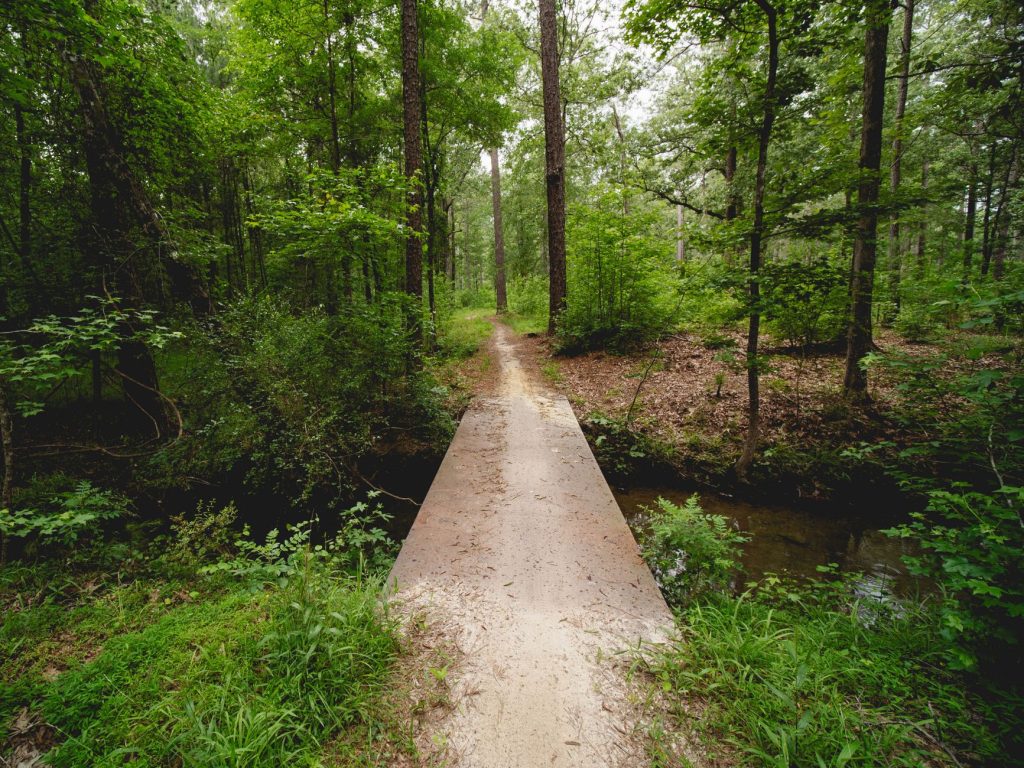
The trail system runs roughly four miles of interconnected loops through bottomland that floods seasonally, which is precisely what makes it interesting. When you show up in late April, the low areas still hold enough moisture to push up pawpaw thickets and stands of river birch so dense they block out the sky. By July it’s dry enough to walk the creek crossings without getting your boots soaked. Each season runs the place through a different version of itself.
Parking is a gravel pull-off on Township, and there’s no fee. You pick up a rough trail map from a weathered kiosk that may or may not have maps left in it — download one from the city’s parks website before you go. The trails are marked with color-coded posts, and while they’re not obsessively maintained, that’s part of the deal. This isn’t a groomed greenway. The footing is uneven, there are roots, and after rain the creek crossings require some thought. Bring actual shoes.
What sets Turnbull apart from the other natural areas around Fayetteville is the interpretive signage, which genuinely teaches something. The forest is managed as an educational site partly for the University of Arkansas, and the signs along the main loop explain things like why the forest floor here stays so rich, how floodplains filter runoff, and what the difference is between a shortleaf pine and a loblolly. It’s written plainly enough that it doesn’t feel like a lecture, and specific enough that you actually learn something before you’re back at your car.
The birding here is better than most people expect. The bottomland habitat pulls in species that the drier upland parks around Fayetteville don’t get in the same numbers — wood thrush, Acadian flycatcher, yellow-billed cuckoo in summer. If you go in early May, the warbler migration moving through the creek corridor can be genuinely good. There’s a bench near the creek on the lower loop where it’s worth sitting still for ten minutes to see what turns up.
The trail system is quiet on weekdays. Weekend mornings draw some families with kids, and the occasional trail runner, but it rarely feels crowded. No mountain bikes, no dogs off-leash policy, though enforcement is loose. The whole thing takes about ninety minutes to walk at an easy pace, less if you skip the outer loop, more if you stop to read the signs or watch the creek.
It costs nothing, it’s right inside the city, and it shows you a piece of Fayetteville that most residents have never seen. For what it is — a working educational forest that happens to be open to the public — it delivers more than you’d expect from a free morning walk.