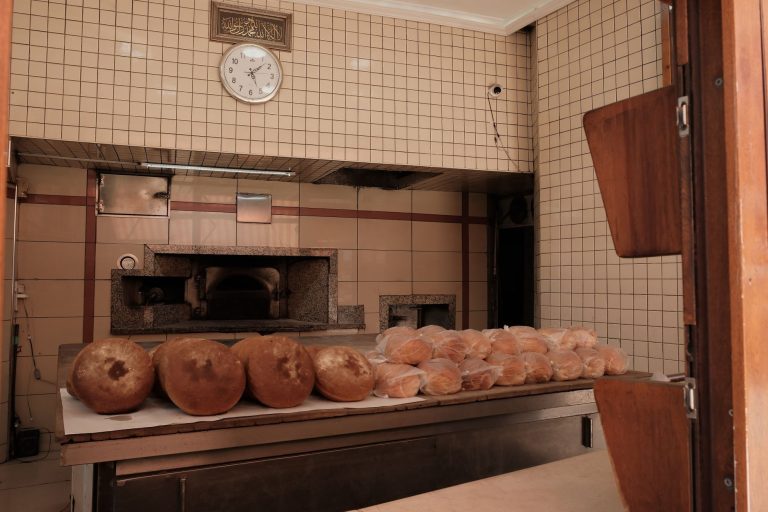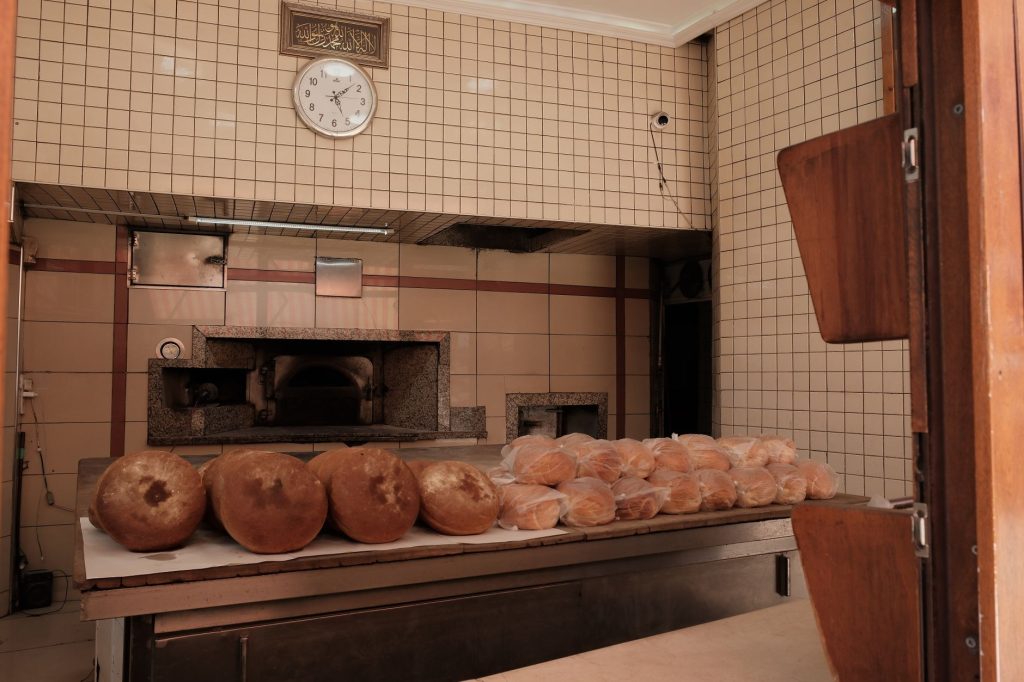
Yassine’s Bakery on Ryan Road makes Lebanese flatbread, and it has been doing that since the late 1990s. Walk in on a weekday morning and you will find Mohamed Yassine — or one of his sons — pulling rounds of dough from a deck oven that runs from before dawn until early afternoon, when the bread runs out and the door locks.
The building is a converted storefront on Warren’s east side, in a stretch of Ryan Road that sits between a tire shop and a halal butcher. There is no sign out front that would catch your eye from a moving car. What you do notice, once you park, is the smell — a warm, yeasty smoke that hits the moment you crack your car door. That smell is what brings people back, and it is what keeps regulars from switching to grocery-store pita even when it would be cheaper and more convenient.
When you step inside, the counter is maybe eight feet wide. Behind it, the oven is the whole room. Mohamed’s son Ramzi handles most of the counter work now, stacking rounds of bread into thin plastic bags with the speed of someone who has done it ten thousand times. The bread itself — called khubz in Arabic — is different from the pita you find shrink-wrapped in a supermarket. It is thinner, with a slight char on the underside and an interior that stays open and pliable rather than gummy. It is baked fresh in cycles, and if you arrive between batches, you wait. Nobody seems to mind.
A bag of six or eight rounds runs you about two dollars. The price is almost aggressively low. If you ask Ramzi about it, he will shrug and say his father does not want to charge more than people can afford to pay. That ethos is not performative — the regulars here are largely working-class families from Warren’s Arab-American community, Lebanese and Syrian households who buy bread the same way some families buy milk, two or three times a week.
You can also pick up a few other things: bags of raw pine nuts, jars of olive oil from local Middle Eastern distributors, and sometimes a tray of ka’ak — ring-shaped cookies flavored with anise and sesame — when the family has made a batch. But bread is why you come, and bread is what you leave with.
Go in the morning, ideally before ten. By eleven the freshest rounds are spoken for and the oven is winding down. Bring cash. There is no card reader, no app, no loyalty punch card. Mohamed started baking here when his kids were young, and his system has not needed to change. What you get is bread, made the way his family made it, sold at a price that respects the people buying it.
That is the whole story, and it is enough of one.