Lamar, Colorado – The skies over Heartland Ranch in Bent County were recently filled with drones as Colorado Parks and Wildlife (CPW) began its second year of monitoring a new release of endangered black‑footed ferrets. The effort, conducted in partnership with the Southern Plains Land Trust and researchers from the Smithsonian’s National Zoo and Conservation Biology Institute, aims to gather detailed movement data that will guide future conservation strategies.
Release details and tracking technology
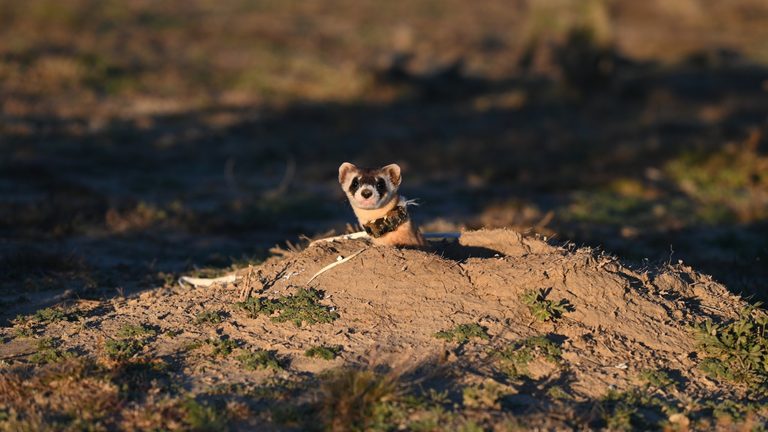
On November 18, CPW received 38 black‑footed ferrets from the U.S. Fish and Wildlife Service’s National Black‑Footed Ferret Conservation Center. The group included 35 juveniles and three adults, all of which were released onto Heartland Ranch. Twenty‑two of the ferrets were fitted with VHF transmitters and movement‑recording devices, while the remaining animals were monitored via drone‑based thermal imaging that detects the VHF signals.
Data collection goals
According to CPW wildlife biologist Katie Merewether, the combined use of collars and drones will create a comprehensive picture of ferret activity, including their underground movements. “The collars can help us understand how ferrets are moving, hunting and resting during their first week in the wild,” she said. The data will reveal whether the animals encounter predators or face challenges crossing the landscape, informing adjustments for future releases.
Predator monitoring
CPW is also gathering information on collared swift foxes and badgers in the area to identify potential predators. When a ferret is confirmed as preyed upon, the precise location and timing can help determine which species was responsible, allowing wildlife managers to refine protection measures.
Background on the species
Black‑footed ferrets were once thought extinct until a small population was discovered in Wyoming in 1981. Today they remain endangered nationwide and rely on prairie‑dog colonies for food and shelter. The species is especially vulnerable to sylvatic plague, which can devastate prairie‑dog colonies. CPW combats the plague by distributing oral vaccine baits and applying dust to prairie‑dog burrows to target the fleas that spread the disease.
Looking ahead
The data collected this season will be analyzed to improve management strategies for future ferret releases across Colorado. By leveraging modern technology and collaborative research, CPW hopes to strengthen the recovery of this iconic prairie species and preserve the ecological balance of the region’s grasslands.
Original reporting: KRDO (Colorado Springs metro) — read the source article.