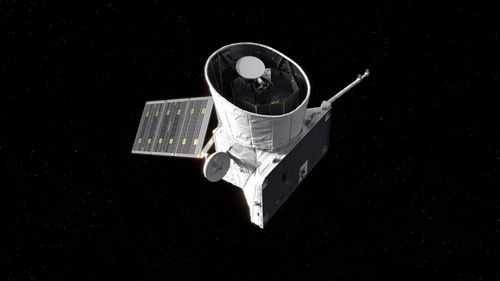
Engineers at the European Space Agency (ESA) in Darmstadt, Germany, announced that the BepiColombo mission successfully entered orbit around Mercury last week, even though a software timing glitch shortened the final thruster burn.
Glitch and adjusted orbit
The spacecraft, a joint effort with Japan’s Aerospace Exploration Agency (JAXA), was scheduled for a 37‑minute burn to achieve a 58‑hour orbit. The burn stopped after 28 minutes, resulting in a 75‑hour orbit that places the probe about 10,000 kilometers higher than originally planned. “We were rather lucky,” said Ignacio Tanco, head of Inner Solar System Mission Operations at ESA, noting that the spacecraft remains safe and functional.
Impact on upcoming maneuvers
The altered orbit reduces the margin for error in future operations, including the planned separation of the two orbiters on December 9. Engineers will need to adjust timing for the separation and subsequent science activities, but they are confident the mission can still meet its objectives.
The software issue stemmed from a timing mismatch between the guidance system and thruster commands, triggering an unexpectedly strong command that halted the burn. ESA had estimated a one‑in‑six chance of such a glitch occurring, based on simulated scenarios, though it was not part of the training runs for the orbit insertion.
Mission background
Launched in October 2018 on an Ariane 5 rocket from Kourou, French Guiana, BepiColombo traveled more than 6 billion miles over eight years to reach Mercury. The mission carries two orbiters: ESA’s Mercury Planetary Orbiter and JAXA’s Mercury Magnetospheric Orbiter, which together will study the planet’s surface, interior, and magnetic environment.
Previous Mercury missions include NASA’s Mariner 10 (1973) and MESSENGER (2004‑2015). BepiColombo aims to answer lingering questions about Mercury’s small size, large iron core, and active magnetic field—features not shared by the Moon, Venus, or Mars.
Looking ahead
After the two orbiters separate, each will conduct its own scientific campaign, with the main science phase slated to begin in April 2027. Despite the recent hiccup, mission officials remain optimistic that BepiColombo will deliver valuable data on the solar system’s innermost planet.
Original reporting: WPBF West Palm Beach — read the source article.