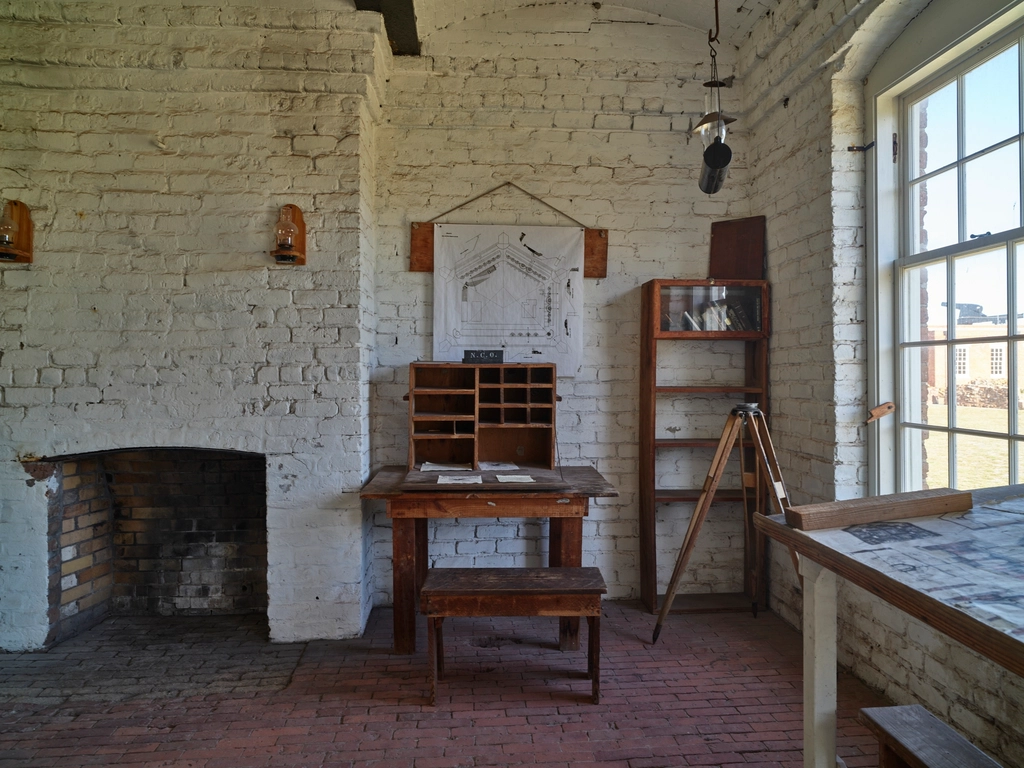
The bricks at Fort Clinch were laid starting in 1847, which means the fort was already obsolete before the Civil War ended. Military engineers kept building it anyway. That detail — the dogged construction of something nobody would ever actually need — somehow makes the place more interesting, not less.
Fort Clinch sits at the northern tip of Amelia Island, about an hour from downtown Jacksonville if traffic cooperates, which it usually does on a weekday. You cross into Nassau County, follow A1A north through Fernandina Beach, and eventually roll through the park gate for $6 a vehicle. The road through the pines is flat and unremarkable right up until you park and walk toward the Atlantic side, and then it isn’t unremarkable at all.
The beach here runs along a narrow spit with the Cumberland Sound on one side and the ocean on the other. On a Saturday morning in January, there were maybe a dozen people on it. Shells accumulate in quantity because the currents conspire to drop them here — not the crushed-up rubble you rake through at some beaches, but actual intact lightning whelks and horse conchs the size of a child’s shoe. The shelling alone would justify the trip for certain kinds of people. You know who you are.
Then there’s the fort itself, which is the kind of structure that reminds you how much engineering went into the nineteenth century before anyone had machines to do the heavy work. The masonry is thick and irregular and brown, and when you walk through the low-ceilinged passages into the interior, the temperature drops noticeably. In July, that matters a great deal. The views from the ramparts look out over the sound toward Cumberland Island, Georgia, which is tantalizingly visible and completely inaccessible unless you plan ahead and arrange a ferry from St. Marys.
On the first weekend of most months, the park runs living history demonstrations with reenactors in Union Army uniforms going about the routine business of an 1864 garrison — cooking, drilling, cleaning muskets. It’s aimed partly at kids but isn’t condescending about it. The reenactors actually know things and will talk your ear off if you let them. The upcoming schedule is on the Florida State Parks website and worth checking before you go.
Camping is available here too, with both tent sites and RV hookups tucked under the trees a short walk from the beach. The sites aren’t enormous, but they’re shaded and well-spaced, and waking up to walk to that beach before anyone else arrives is a legitimately good way to start a morning. Sites run roughly $24–$28 a night and book up faster than you’d expect, especially in fall and spring when the weather is cooperative without being dramatic about it.
What Fort Clinch doesn’t have: a gift shop with any real ambition, cell service inside the fort walls, or a restaurant within convenient walking distance. What it does have: a fishing pier on the sound side that’s free once you’ve paid park entry, genuine quiet on most weekday mornings, and the mild cognitive dissonance of standing inside a Cold War-era addition to an antebellum fort on a barrier island that most of Jacksonville seems content to visit only in summer. Their loss.