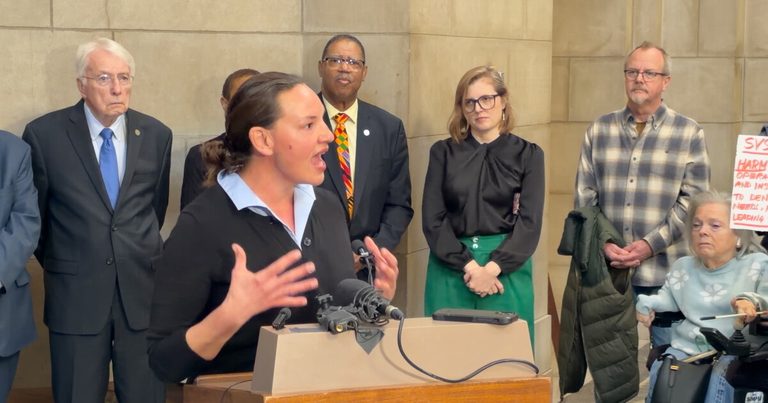
In a gathering at the Nebraska State Capitol rotunda on Tuesday, a coalition of state senators and disability advocates pressed Governor Jim Pillen to reconsider a pending Medicaid reform that would slash payments to providers serving low‑income families and individuals with disabilities.
Legislative push for a special session
Nineteen senators signed an initial letter requesting a special session, the minimum number needed to compel the governor to reconvene the Legislature. An additional fourteen signatures are required to reach the statutory threshold of thirty‑three.
Governor Pillen responded that he does not see a need for a special session at this time. “There is no need for me to call a special session at this time,” he said in a statement, adding that he expects welfare beneficiaries to have “skin in the game” and that this principle guides his priorities.
Opposition from lawmakers and families
State Sen. Machaela Cavanaugh, a vocal opponent of the cuts, argued that the governor’s remarks mischaracterize the people most affected. “He uses very disrespectful language and derogatory terms to describe the community,” Cavanaugh said, emphasizing that many of those slated to lose benefits are integral members of families and neighborhoods.
For the Gillen family, the issue is deeply personal. Their 24‑year‑old son, Will, lives with severe disabilities, experiences dozens of seizures daily, and relies on round‑the‑clock care from his parents. “We feel the governor’s comments suggest families like ours are simply seeking government assistance without contributing ourselves,” the Gillens said. “Will cannot work; he depends on us for everything. How can we be expected to have ‘skin in the game’ when he cannot earn a living?”
Potential impact on care providers
Advocates warn that reduced Medicaid reimbursement rates could force some home‑care agencies to exit the market, leaving families with fewer options and higher out‑of‑pocket costs. “If providers can’t afford to operate, families will be forced into institutional settings, which are far more expensive and less personal,” said a spokesperson for the Nebraska Disability Advocacy Coalition.
The first wave of the proposed cuts is scheduled to take effect on Jan. 1, unless the Legislature acts to amend or halt the plan.
Governor’s rationale
Governor Pillen defended his stance, stating that the state must ensure fiscal responsibility and encourage personal contribution to welfare programs. “We must balance compassion with accountability,” he said, noting that the administration is reviewing the overall budget to identify sustainable solutions.
Senators pushing for a special session argue that the timing of the cuts—just weeks before the new year—does not allow families adequate time to adjust. They also point to recent data showing that Medicaid remains a critical lifeline for Nebraskans with disabilities, enabling them to remain in their homes and communities.
Next steps
The debate is expected to continue in the coming weeks as both sides lobby fellow lawmakers and the public. If enough senators sign the letter, the governor would be constitutionally obligated to call a special session, giving legislators an opportunity to amend the proposed reductions.
Original reporting: KMTV 3 News Now (Scripps) – local — read the source article.