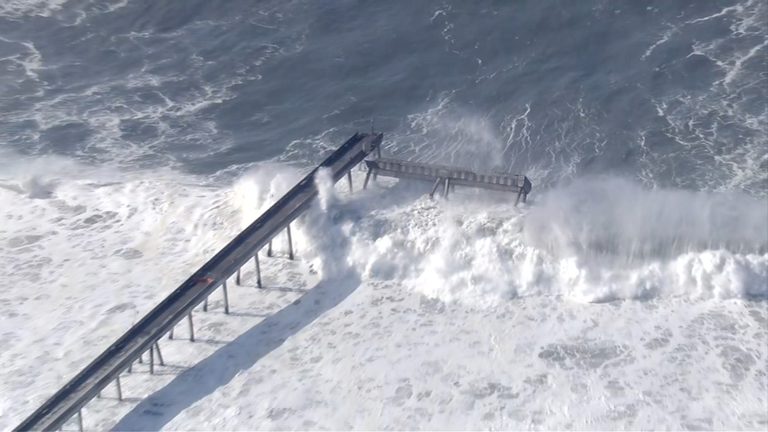
Coastal residents in California are seeing unprecedented water levels as “king tides” surge higher than ever before. The term, a colloquial way to describe the year’s highest tides, has become a growing concern for communities along both the Pacific and the Gulf coasts.
What causes a king tide?
King tides occur when the sun, moon and Earth line up closely, allowing their gravitational pulls to combine and raise ocean levels to their peak. These peaks typically happen during full and new moons and are further amplified by seasonal factors.
2026 El Niño adds to the problem
Scientists say the 2026 super El Niño—a natural, temporary warming of parts of the Pacific—has lifted baseline water levels, intensifying the impact of king tides. “El Niño is natural, the sea‑level rise we’re seeing now isn’t,” said Alec Bogdanoff, an oceanographer and meteorologist based in Fort Lauderdale, Florida. “The flooding we’re seeing with these king tides is a preview of what’s to come in the 2030s and beyond.”
Local flooding incidents
Four California locations recorded their all‑time highest observed water levels in late October, and near‑record king tides flooded several low‑lying neighborhoods as Thanksgiving travel increased. Stormwater systems, designed for lower water levels, struggled to cope when ocean water rose above their intended capacity.
Why sea‑level rise matters
Climate change is driving sea‑level rise through melting glaciers and expanding warm ocean water. As the baseline rises, king tides that once occurred once or twice a year are becoming more frequent, leading to regular tidal flooding that disrupts daily life.
Preparing for the future
Experts suggest communities can mitigate impacts by conducting stormwater assessments and creating adaptation plans. Bogdanoff, principal scientist and co‑founder of the engineering firm Brizaga, points to Florida’s Resilient Florida Program as a model. Potential steps include raising roads, expanding green spaces that absorb water, and upgrading stormwater systems to rely more on pumps than gravity.
“In some communities it’s a much bigger conversation about what the future looks like,” Bogdanoff said. “We don’t have to fix everything at once. We just need to make sure the next decision is a little smarter than the last one.”
Original reporting: Allentown News – 6abc Philadelphia — read the source article.