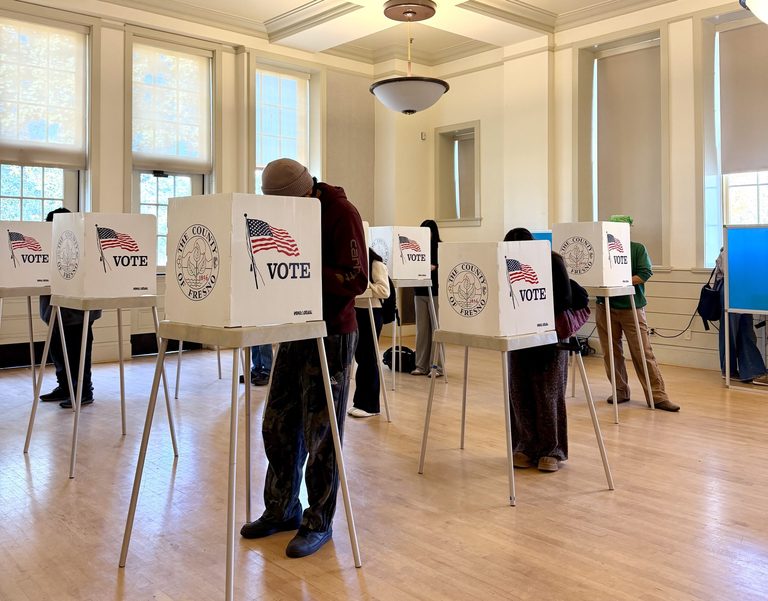
Fresno residents voted in the November 2026 midterm elections, delivering a decisive win for Latino Democratic candidates and rejecting the proposed countywide transportation tax, Measure S. The outcomes reshape local governance and set the stage for new policy directions that could affect daily life in the Central Valley.
According to FresnoLand, Republican incumbent David Valadao was soundly defeated by Democrat Randy Villegas, who captured the South Valley’s congressional seat. The victory underscores a broader trend of Latino Democrats gaining influence in the region, a point highlighted by political consultant Pedro Ramirez, who told the outlet that “Latino Democrats” were the clear winners.
Down‑ballot races also reflected this shift. Outsider candidates backed by small donors unseated establishment favorites. Naindeep Singh, Ariana Martinez Lott, Joaquin Arambula and Maria Pacheco each secured seats on the Fresno City Council or Fresno County Board of Supervisors, while three Fresno City Council incumbents and one supervisor candidate lost, none of the contests being close.
The election marked a setback for traditional interest groups. The North Coast States Carpenters’ Union emerged as the most improved organization, gaining influence through the newly elected council and supervisor members. In contrast, the Building Trades Council of Fresno‑Madera‑Tulare‑Kings suffered its worst week, losing every candidate it endorsed, including supervisor hopeful Mike Karbassi.
Measure S, a proposed transportation tax intended to fund regional infrastructure, was defeated despite an endorsement slate that spanned 11 Republican mayors—including Fresno’s Jerry Dyer—and several social‑justice NGOs. The measure’s failure, according to the source, reflects “anti‑tax sentiment” amid a national affordability crisis and resulted in a loss of about half a million dollars in contributions from supporters.
Labor‑policy implications also surfaced. Chuck Riojas, head of the Building Trades Council, had negotiated the city’s project labor agreement, which governs wages and conditions on public works projects. With the council’s incoming composition expected to differ, Riojas’s efforts to advance a countywide project labor agreement faced resistance from outgoing Supervisor Nathan Magsig during the lame‑duck session.
Pedro Ramirez credited the successful outsider campaigns to their focus on issues such as the Statewide Energy Development Agency (SEDA), ICE raids and rising utility rates, rather than the traditional “pro‑law‑enforcement, pro‑teacher, pro‑business” rhetoric. He also noted that coordinated backing from groups like the Chamber of Commerce, Realtors and Apartment Association has waned, marking a second or third election cycle where their preferred candidates were defeated.
What’s next? The newly seated council members and supervisors will convene for their first regular meeting in early December, where they are expected to review the city’s project labor agreement and consider alternatives to the failed Measure S. Residents can attend the upcoming council session to hear discussions on transportation funding options and labor‑policy reforms that could shape Fresno’s infrastructure projects for years to come.
Sources: fresnoland.org