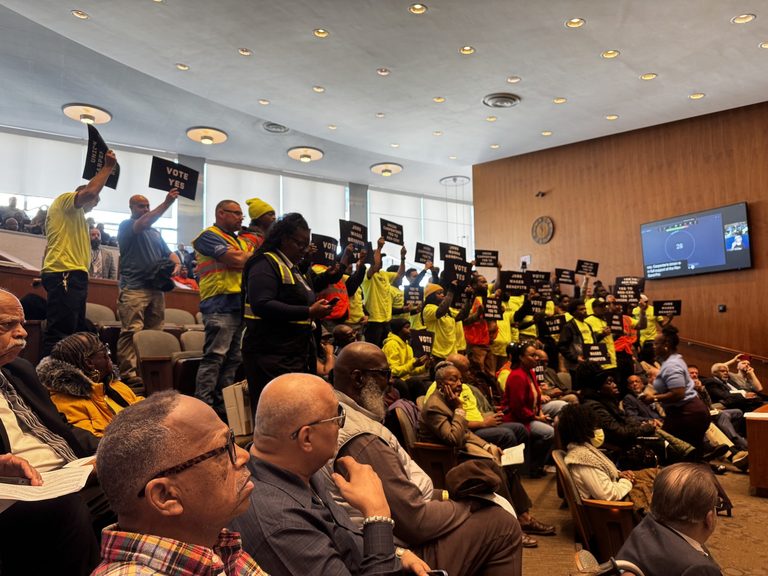
Detroit City Council gave final approval Tuesday to a $2.2 billion redevelopment plan for the Renaissance Center (RenCen) and adjacent East Riverfront, a move council members said will bring jobs, housing and a new family‑friendly riverfront for the city’s youth.
After a week‑long delay to obtain answers from General Motors Co. and Bedrock, council members voted 7‑2 to adopt about $473 million in tax incentives and an unprecedented $133.3 million in community‑benefit commitments. The Downtown Development Authority also pledged $75 million in cash, bringing total public subsidies to “over half a billion dollars,” according to BridgeDetroit.
Supporters highlighted the promise of employment and new public spaces. Council President James Tate, Pro Tem Coleman A. Young II and members Scott Benson, Angela Whitfield‑Calloway, Mary Waters, Renata Miller and Latisha Johnson voted in favor. Whitfield‑Calloway recalled attending her high‑school prom at the RenCen and argued that Detroiters have never truly enjoyed the riverfront, noting the project would give young people “something to do” beyond walking the length of the river. Waters envisioned a “Navy Pier‑like” destination that could attract visitors from across the country, while Miller emphasized the job commitments and called the plan “the best, most welcoming, family‑friendly riverfront anywhere by Detroiters and for Detroiters.”
District 4 Council Member Latisha Johnson said she switched to a yes vote after a resolution, backed by Mayor Mary Sheffield, redirected the $90 million the development will pay in lieu of taxes (PILOT) toward affordable housing, neighborhood beautification and anti‑poverty efforts beyond downtown and midtown. She added she could not “deprive Detroiters from being able to access jobs.”
Opposition came from Council Members Gabriela Santiago‑Romero and Denzel McCampbell, who each cast a lone “no” vote on all items except the PILOT resolution. McCampbell cited more than 120 instances in the community‑benefits agreement that “lacked enforcement mechanisms,” while Santiago‑Romero urged a longer deliberation period and a “human‑centered design,” arguing that Detroiters should not feel they are paying without input.
The redevelopment plan calls for $1.6 billion to reconfigure the RenCen towers—deconstructing two of the five structures and converting the remainder to housing, office space and amenities—while $624 million will fund an entertainment‑focused build‑out along several acres of the East Riverfront.
Bedrock’s CEO Jared Fleisher told reporters the project is “right” and apologized for calling McCampbell’s funding questions “indecent.” GM and Bedrock issued a joint statement thanking the council, Mayor Sheffield’s administration, residents and the Neighborhood Advisory Council for achieving what they called the largest community‑benefits package in Detroit’s history.
What’s next: The council’s Neighborhood Advisory Council will continue to monitor compliance with the community‑benefits agreement, and the city will track the promised job creation and affordable‑housing allocations as the project moves forward.
Sources: bridgedetroit.com