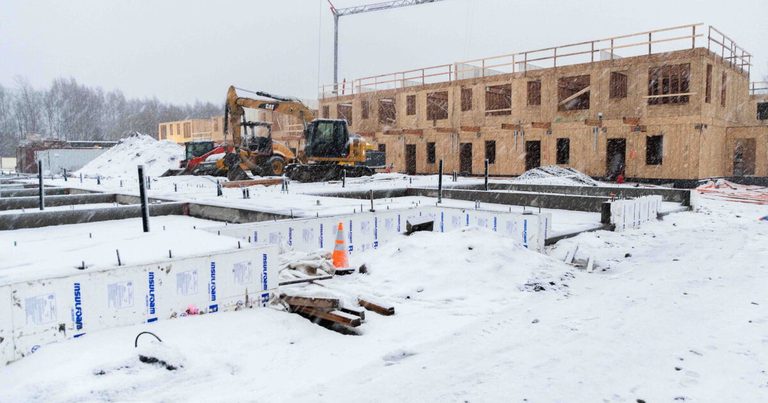
Construction crews at a site near West Anchorage’s Sand Lake are framing two long, two‑story buildings that will become part of a four‑building, 58‑unit townhome complex slated for completion by next summer, according to Alaska Public. Developer Shaun Debenham said the project, which has been on hold for five years, will eventually include three‑story townhomes and will be rented at market rates.
The project comes as Anchorage’s housing department reports issuing permits for more than 500 housing units this year – the highest number in over a decade. Multifamily permits, which include townhomes, apartments and senior living facilities, have risen to well over 300 this year, up from just 34 two years ago, highlighting a notable shift after years of stagnant homebuilding.
City officials attribute the surge to recent municipal policy changes. In April 2025, the Anchorage Assembly approved a tax‑abatement measure that suspends property taxes for at least 20 years on developments with eight units or more, while land taxes continue. Graham Downey of the mayor’s office explained that the abatement was “specifically designed” to make multifamily projects financially viable and that the city is not losing tax revenue because the housing would not be built without the incentive.
Additional regulatory adjustments have also eased development. Early in 2025 the Assembly paused multifamily‑specific design standards—such as shadow and roof‑alignment rules—and suspended the major site‑plan review process, which developers said added expense and risk. Tyler Robinson of the Cook Inlet Housing Authority told an August municipal housing work session that the pause is enabling more projects and that permitting and site‑review times have improved, reducing uncertainty and cost.
Despite the progress, both Robinson and Debenham say further reforms are needed. Robinson urged the Assembly to make the multifamily design‑standard pause permanent, noting it expires in 2028 and developers are already planning projects that would break ground then. Debenham called the city’s Title 21 land‑use code “contradictory and confusing,” urging simplification of its thousands of pages. The city is currently working to streamline Title 21, refurbish existing buildings, and consider a proposal known as MMHOP that would expand allowable housing types on certain properties.
What’s next: The Anchorage Assembly is scheduled to discuss the MMHOP proposal at its Dec. 1 meeting, a step that could further shape the city’s housing landscape.
Sources: alaskapublic.org