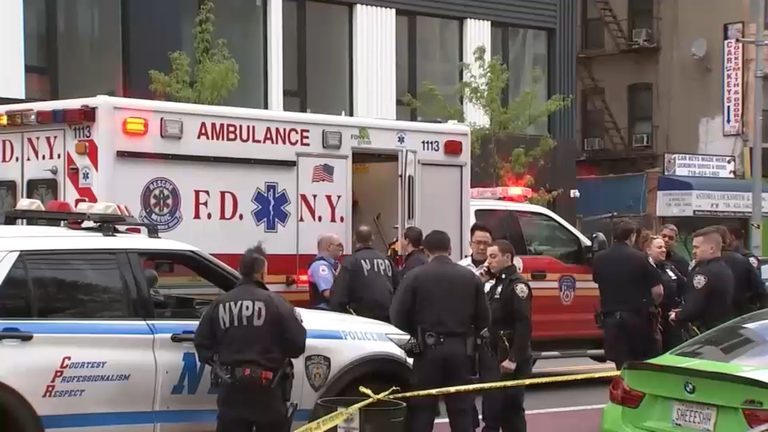
New York City’s emergency medical services are facing a staffing crisis that is lengthening response times for both life‑threatening and routine calls, according to a recent city comptroller report. Union representatives say low pay and difficulty retaining experienced EMTs are at the heart of the problem.
Response‑time data shows steep rise
The comptroller’s analysis shows that over the past ten years the average response time for critical emergencies has risen by 41%, adding nearly four minutes to reach patients. The current average stands at about 14 minutes. For non‑critical calls, response times can stretch to two hours in some neighborhoods.
Union leaders point to pay and recruitment challenges
Local 2507 president Michael Greco warned that the agency is “almost 600 down” from its budgeted staffing level. “We’re supposed to have around 4,000 EMTs and paramedics, but we have fewer than 3,500,” he said. Starting salaries for EMTs sit just above $39,000 a year and cap at $59,500 after five years, figures union leaders say are not competitive with neighboring fire‑fighter salaries.
Greco added, “We’re recruiting basically right out of high school. We can’t pull in seasoned veterans. People don’t stay.” The shortage has left many ambulance crews stretched thin, contributing to the longer waits.
Council proposal for an independent EMS department
City Council Member Susan Zhuang has introduced legislation that would spin off EMS into a stand‑alone department, separate from the Fire Department of New York (FDNY). Zhuang argues that EMS personnel receive “very low” compensation compared with FDNY workers and that an independent agency could focus more directly on staffing and pay issues.
Local 3621 representative Vincent Variale supports the idea, saying a dedicated commissioner could address long‑term concerns. “Having a separate department with a commissioner that can focus on EMS issues would help in the long term,” he said.
FDNY leadership pushes back
FDNY Commissioner Robert Tucker cautioned that separating EMS would create duplication and disrupt the integrated response model that has proven effective in emergencies, such as the recent building collapse where fire and EMS teams worked seamlessly together.
“Pulling them out and creating another agency would be very duplicative,” Tucker said.
Immediate focus remains on compensation and staffing
Variale emphasized that creating a new department would not instantly solve the pressing problem of pay parity and staffing shortages. “The lack of parity in pay and benefits is hurting staffing, which is causing response times to increase,” he noted.
Both union leaders and city officials agree that addressing the compensation gap is essential to attracting and retaining qualified EMTs, which in turn should improve response times for New Yorkers who rely on rapid medical assistance.
What’s next for NYC EMS?
The council will consider Zhuang’s bill in upcoming committee hearings, while the FDNY and EMS unions continue negotiations over wage scales and recruitment incentives. Residents are urged to stay informed about any changes that could affect emergency services in their neighborhoods.
Original reporting: Brookhaven News – ABC7 New York — read the source article.