Fort Worth city staff are moving forward with a major downtown development that could reshape the skyline. In a recommendation that will be presented to the city council in the first quarter of next year, the staff has selected Matthews Hospitality, a Dallas‑based developer, to build a new convention‑center hotel on a 4.6‑acre site just east of the Fort Worth Convention Center.
Project scope and requirements
The request for proposal released by the city in April outlines a substantial hotel program. The developer must deliver a 600‑ to 800‑room, four‑star (or higher) hotel with at least 100,000 square feet of ballroom and meeting space, a minimum of 30,000 square feet of ground‑floor retail and dining, and adequate parking. Optional components include residential or student housing, innovation‑focused office space, and a public plaza.
One of the RFP’s stated goals is to “create an architectural icon that reshapes the downtown Fort Worth skyline,” signaling the city’s desire for a landmark project rather than a generic hotel.
Matthews Hospitality’s track record
Matthews Hospitality is no stranger to large‑scale hospitality projects. The firm previously developed the Omni Dallas Convention Center hotel and the boutique Canvas Hotel in Dallas. Although a Canvas Hotel is listed for Fort Worth’s Near Southside, that specific project does not appear on the company’s website at this time. The developer also partnered with the city of Cleburne on a $21 million baseball stadium completed in 2017.
Convention center expansion context
The hotel is part of a broader, two‑phase $701 million redevelopment of the Fort Worth Convention Center. Phase 1, already completed at a cost of $95 million, upgraded food and beverage facilities, realigned Commerce Street, added a new southeast entrance, and expanded loading dock capacity.
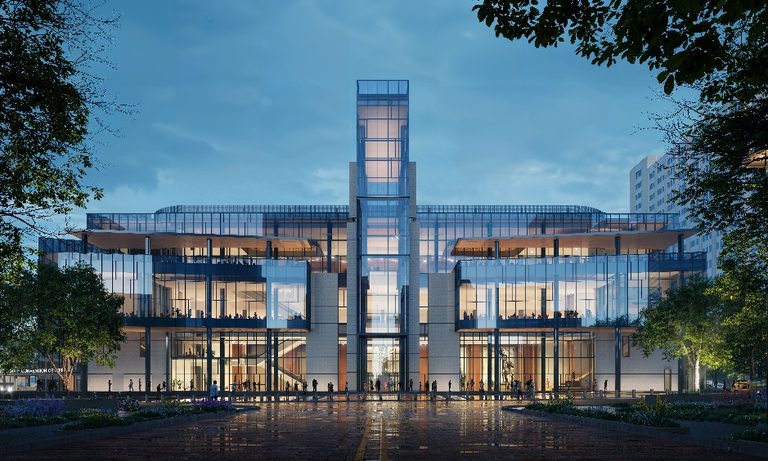
Phase 2, budgeted at $606 million, will replace the aging 1968 arena with a four‑story addition slated for demolition in early 2027. The addition will add 359,174 square feet of rentable space, including a tower with a transparent glass façade that will face Main Street and provide ballroom views of downtown. Architectural cues draw from historic Fort Worth landmarks such as the Tarrant County Courthouse tower, the Texas & Pacific train station tower, and the Will Rogers Memorial Center’s Pioneer Tower.
Economic impact and community response
Tourism is a $3.3 billion industry in Fort Worth, employing more than 30,000 residents. City officials view the convention‑center expansion and accompanying hotel as a catalyst to attract larger meetings and conventions from across the state and nation, further bolstering the local economy.
“The convention center redevelopment, long term, will add a lot of value in that area of downtown,” said Shane Benner, first vice president at Bradford Commercial Real Estate, who recently sold a building near the convention center. “It’s creating a lot of activity there.”
Recent downtown hotel activity
Fort Worth’s downtown corridor has seen several hotel projects in recent years. The Le Meridien Fort Worth Hotel opened with 188 rooms, and the Omni Fort Worth Hotel is planning a 400‑room expansion on the opposite side of the convention center. In January, owners of the Oil and Gas Building at 700 W. 7th St. filed plans to convert the structure into a boutique hotel with a spa and rooftop restaurant. The Sandman Signature Fort Worth Downtown Hotel, closed after a January 2024 explosion, is expected to reopen next month, adding another 245 rooms.
“We’re excited to be back and open,” said Kathleen McCarthy, general manager of the Sandman Signature Fort Worth hotel. “This area has only gotten more active since we have been closed.”
Next steps
The council’s decision on the Matthews Hospitality recommendation will set the timeline for final design work, financing, and construction. If approved, the hotel is targeted to open in the fourth quarter of 2029 or early 2030, aligning with the completion of the convention‑center expansion.
City leaders and local business owners alike are watching the process closely, recognizing the project’s potential to further cement Fort Worth’s reputation as a premier destination for conventions, tourism, and downtown revitalization.
Original reporting: Fort Worth Report — read the source article.