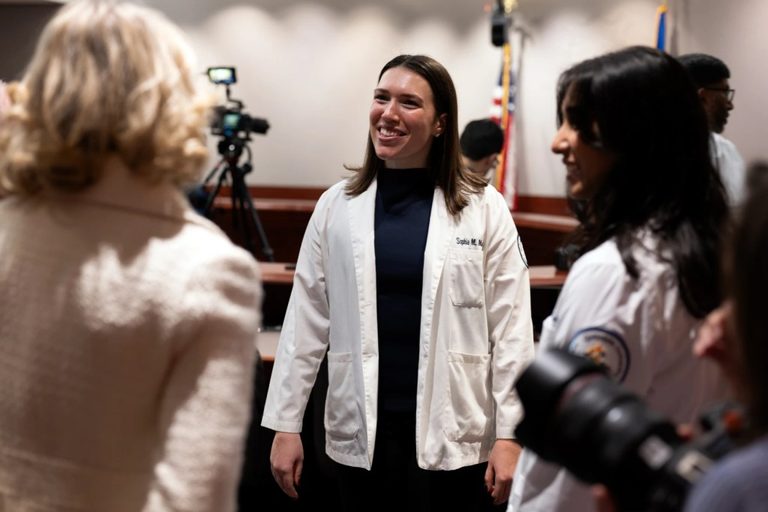
At a Capitol gathering on Thursday, physicians, lawmakers, and university leaders pressed the Connecticut state government to act on a growing shortage of primary‑care doctors in the state’s most rural corners. The coalition, led by Quinnipiac University President Marie Hardin, called for a targeted scholarship that would reward medical students who pledge to practice in designated shortage areas.
Why the shortage matters
Hardin warned that the lack of primary‑care providers directly affects both the healthspan and lifespan of Connecticut residents, especially in the northeast and northwest rural districts. Dr. Lisa Coplit, dean of Quinnipiac’s Frank H. Netter MD School of Medicine, highlighted that the state ranks in the bottom ten nationally for retaining medical graduates. “Why don’t they stay here?” Coplit asked, noting that the average Netter graduate carries about $250,000 in debt, while primary‑care salaries are roughly 28% lower than those of other specialties. “The math pushes our graduates toward higher‑paying fields or out of state where the cost of living is lower,” she said.
Current workforce gaps
According to Coplit, Connecticut’s primary‑care workforce currently meets only 45‑48% of the state’s needs. The disparity is stark in rural counties: Fairfield County enjoys 97 primary‑care physicians per 100,000 residents, Litchfield County has 56, and Windham County falls to just 45. “Who loses the most? It is our most underserved communities,” Coplit emphasized.
Legislative support
State Senator Saud Anwar, a Democrat from South Windsor and co‑chair of the General Assembly’s Public Health Committee, pledged to prioritize the issue in the upcoming legislative session. “Our ZIP codes should not determine our outcomes,” Anwar said, citing data that show life expectancy can differ by 17 to 20 years between neighboring ZIP codes. He labeled the situation a “policy failure” that demands immediate action.
Proposed scholarship details
The suggested program would provide financial assistance to medical students who sign a service agreement to work in designated shortage areas for a set period after graduation. By offsetting tuition costs and reducing debt burdens, the scholarship aims to make primary‑care careers more financially viable, encouraging graduates to remain in Connecticut and serve the communities that need them most.
Community response
Local health advocates and rural residents expressed optimism that the scholarship could reverse the trend of physicians leaving the state. “We’ve seen too many families travel hours for basic care,” said a resident of a small town in Litchfield County. “If we can keep doctors here, it will strengthen our families and our faith in the health system.”
Next steps
The proposal will be introduced in the General Assembly’s upcoming session, where lawmakers will debate funding mechanisms and eligibility criteria. If passed, the scholarship could become a model for other states grappling with similar rural health workforce challenges.
Original reporting: The Connecticut Mirror — read the source article.