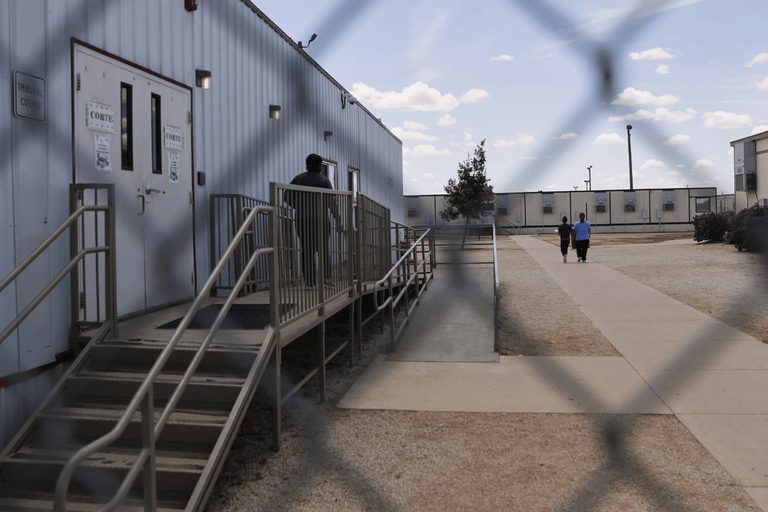
Immigration court hearings that were once held in San Antonio courthouses are now being scheduled inside the South Texas Family Residential Center in Dilley, a detention facility about 75 miles south of the city. The change forces families who are not already in immigration custody to travel to a detention center for their court appearances, or risk a deportation order if they fail to appear.
Local pastors sound alarm
Pastor Dianne Garcia of San Antonio’s Roca de Refugio ministry says she has helped dozens of immigrant families whose hearings were moved to Dilley. Garcia believes the relocation is a tactic to sidestep a recent federal court ruling that limited ICE’s ability to conduct civil arrests at courthouses.
In June, U.S. District Judge P. Casey Pitts struck down Trump‑era policies that expanded ICE’s authority to make courthouse arrests. The judge found the agency’s justification inadequate and ruled the changes arbitrary and capricious under the Administrative Procedure Act, effectively restoring earlier restrictions that limited arrests to exceptional circumstances such as national‑security threats.
Impact on families
Garcia says the new arrangement disproportionately affects families without attorneys or the financial means to travel. “It seems like they’re picking people who don’t have representation, and those tend to be people who don’t have a lot of resources,” she explained. Many families receive notices with little time to arrange transportation; one Venezuelan mother was given only six days to decide whether to appear.
After attending her hearing, the mother was fitted with an ankle monitor. The report from Spanish newspaper El País noted that roughly 20 families have faced similar summonses, with some initially suspecting the notices were fraudulent.
Detention‑center restrictions on pastoral visits
Garcia also reports she has been barred from entering the Dilley facility to provide pastoral care to detained families, despite no official explanation. She suspects her outspoken criticism of ICE contributed to the restriction.
“I wasn’t actually talking about family detention, but I’ve now been barred from visiting families in that detention center, including members of my own congregation,” Garcia said.
Hope for policy change
Despite the challenges, Garcia remains hopeful that a change in state leadership could bring a more humane approach. She notes that the governor‑elect has expressed interest in closing Dilley and ending the family‑detention system.
“If the new administration follows through, we might eventually see this system of family and child detention shut down,” Garcia added.
What the Trump administration says
The Trump administration maintains that the relocation of hearings is a lawful administrative decision aimed at preserving the integrity of the judicial process after the June ruling limited ICE’s presence at courthouses. Officials argue that holding hearings within a secure facility ensures safety for all parties and prevents intimidation.
While critics label the move a barrier to due process, the administration contends it simply adapts to a court order while continuing to enforce immigration laws consistent with constitutional authority.
Original reporting: San Antonio Report — read the source article.