What do you even do with 40,000 records? That’s the question I asked Marcus Webb the first time I wandered into his shop on West Third Street, mostly because the stacks had reached a point where I genuinely could not see him behind the counter. He laughed, pulled a beat-up copy of a Marvin Gaye live album out of nowhere, and said, “You sell ’em one at a time, same as always.”
Marcus has been running Gem City Vinyl out of a converted double-car garage in West Dayton for going on eleven years. The building used to belong to his uncle, who stored lawn equipment in it. Now it stores roughly four decades of accumulated record-buying, estate-sale raiding, and collection rescues from people who “just need the space.” The inventory turns constantly — Marcus estimates he prices and pulls about 200 new records a week — which means every visit feels genuinely different from the last.
The neighborhood is residential and quiet, the kind of block where someone is usually mowing a lawn or sitting on a porch. The shop has no real signage to speak of, just a hand-lettered sandwich board on the sidewalk and a string of lights visible through the garage door when it’s propped open. It runs Friday through Sunday, noon to six, plus whatever Monday mornings Marcus feels like showing up. He posts on Instagram when something interesting comes in, and those posts move fast.
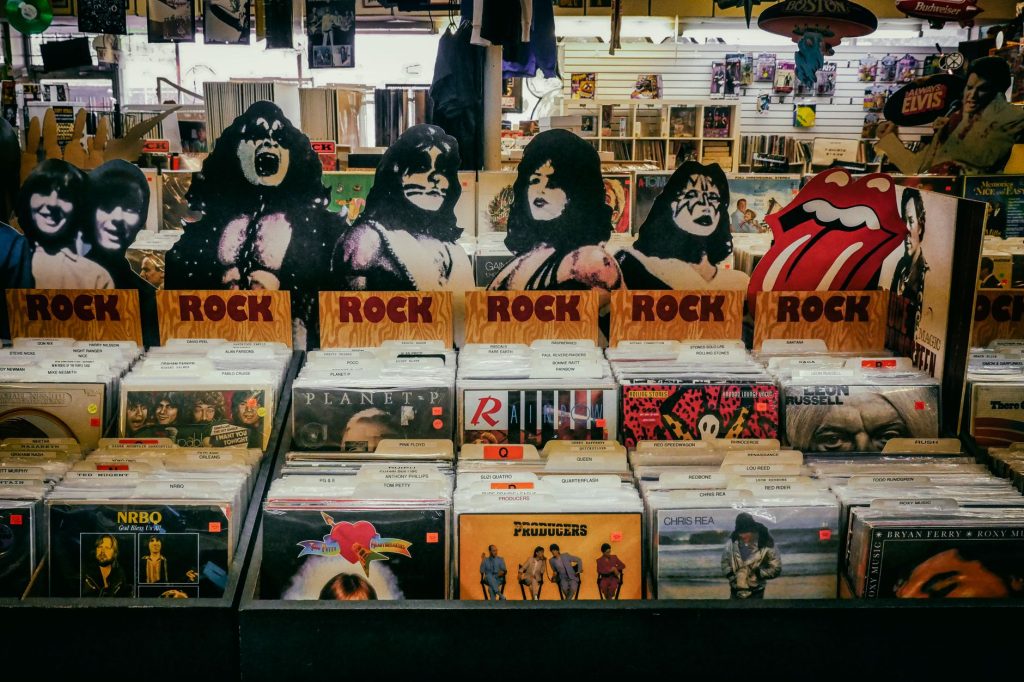
Inside, the organization is deceptively logical once you learn it. Soul and R&B take up the entire east wall, which is Marcus’s doing — “that’s where I live,” he told me once — followed by jazz, then classic rock, then a rotating chaos section he calls “the pile” that might contain anything from obscure Ohio country to Croatian disco. Prices are written in pencil on the inner sleeve. Most records run two to eight dollars. The rarer stuff, kept in flat wooden crates near the register, can reach forty or fifty, but Marcus prices honestly. He’s not trying to run a museum.
What makes the shop worth a detour isn’t just the volume. It’s Marcus himself. He’s the kind of record seller who will ask what you’ve been listening to lately and then spend twenty minutes pulling things you didn’t know you needed. He’s also completely unbothered if you just want to dig in silence for two hours. I’ve done both, sometimes on the same visit.
He stocks a small selection of used turntables and styluses, mostly entry-level stuff, good for someone just starting out. He’ll tell you plainly whether a cartridge is worth the price. He also does collection appraisals by appointment, which is how a lot of his best inventory arrives — families clearing out a parent’s house, calling him first because someone gave them his number years ago.
Go on a Friday if you want first crack at new arrivals. Go on a Sunday if you want the slower, unhurried version, when Marcus is more likely to be playing something loud and interesting on the shop’s beat-up receiver and you can ask him about it. Bring cash; he takes cards but prefers not to say that until you’re already at the register. And don’t skip the pile. I found a mint copy of a 1973 Willie Hutch soundtrack in there last October for three dollars. Marcus just shrugged. “That one had been waiting for you,” he said.