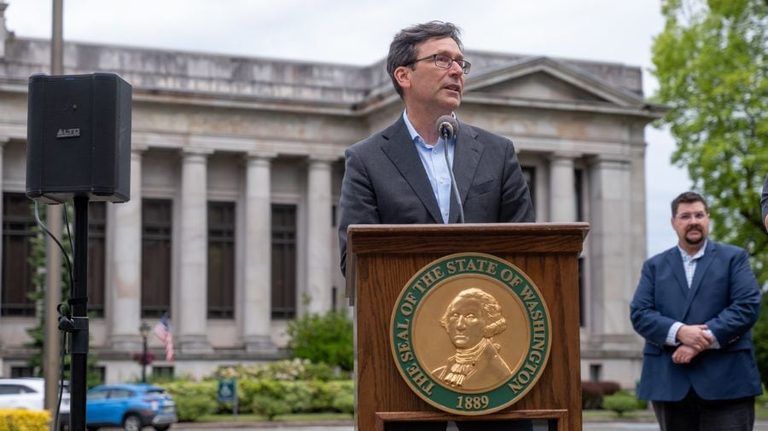
Washington Governor Bob Ferguson is championing the state’s bid to host the United States Space Academy, a proposed national hub for space education and workforce development. In a letter dated Nov. 13 to the Presidential Commission on the United States Space Academy, Ferguson praised Washington’s aerospace strengths and formally endorsed a plan that would locate the academy’s permanent campus at Woodbridge Corporate Park in Federal Way, with supplemental facilities in Auburn.
Why Washington?
Ferguson noted that the state is home to more than 90 space‑related companies employing over 13,000 workers, and that roughly two‑thirds of the world’s operational satellites are manufactured here. He cited industry leaders such as Boeing, Blue Origin, SpaceX, Amazon Leo and Rocketdyne, as well as emerging firms like Stoke Space, Starfish Space, Interlune and Portal Space Systems.
The governor also recalled Washington’s historic contributions to space exploration, pointing out that Boeing workers in Kent built the lunar rovers used during the Apollo missions. Today, the region continues to develop launch vehicles, satellites, propulsion systems and other critical space technologies.
Proposed timeline
The proposal calls for the University of Washington to provide interim academic instruction and facilities beginning in 2028. After three years, the academy would transition to its permanent Federal Way campus in 2031, placing cadets in the South King County Space Corridor alongside a concentration of aerospace manufacturers, research institutions and commercial space companies.
State support structure
Ferguson highlighted the role of the Washington Space Council, which he created through Executive Order 26‑04 earlier this year. The council is tasked with strengthening the state’s space sector, advancing workforce development and identifying investment opportunities. Under the proposal, the Department of Commerce and the Space Council would coordinate partnerships and planning if Washington is selected.
The governor designated the University of Washington as the official responding entity and named Provost Tricia Serio as the state’s selecting official for the application.
Economic and educational impact
By hosting the academy, Washington could attract a new generation of engineers, scientists and technicians, further bolstering the state’s already robust aerospace ecosystem. The academy’s presence is expected to generate high‑skill jobs, stimulate local businesses, and provide a pipeline of talent for existing space firms.
Ferguson concluded, “Washington state has the talent, infrastructure, partnerships, and vision to help make the United States Space Academy a national success,” urging the commission to choose Washington as the academy’s home.
Local reaction
Local leaders and industry groups have expressed enthusiasm for the proposal, noting the potential for increased investment in Federal Way and surrounding communities. The plan aligns with the region’s long‑term vision of becoming a premier hub for space innovation and education.
Original reporting: KIRO 7 (Tacoma / Pierce County stories) — read the source article.