Florida was a cattle state before it was a tourism state, and Forever Florida — about an hour south of Orlando near St. Cloud — has been running working cattle on the same land since the 1800s. The Broussard family opened the property to the public in the early 2000s, not as a theme park, but as a working ecological preserve with 4,700 acres of genuine Florida wilderness: cypress swamps, pine flatwoods, scrub habitat, and open pasture where cattle still graze alongside white-tailed deer.
The flagship experience here is the Cypress Canopy Zip Line Tour, and it earns its reputation quietly. The course runs through old-growth cypress trees above a floodplain, with platforms perched high enough that you’re gliding over the canopy rather than through it. On a clear morning — especially in fall or winter when the humidity finally breaks — the views across the wetlands are genuinely striking. The staff tends to be unhurried and knowledgeable about the ecosystem below, which makes the breaks between lines feel more like a nature walk than dead time.
Eco-Safari coaches run on separate ticketing and cover different terrain — open flatwoods and pasture — in a large elevated vehicle that lets passengers scan for sandhill cranes, gopher tortoises, bald eagles, and the occasional Florida panther track. These tours lean educational without becoming a lecture, and the naturalist guides are good at reading what a group wants. Families with younger kids tend to get more storytelling; adults traveling without children often get deeper habitat detail.
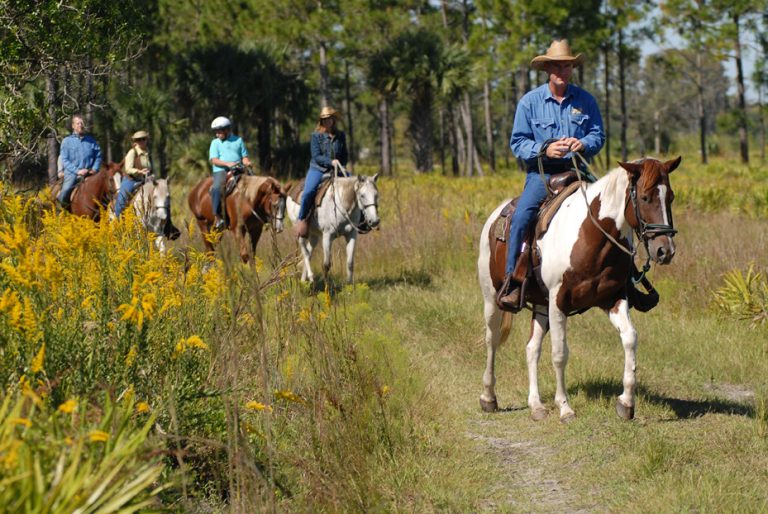
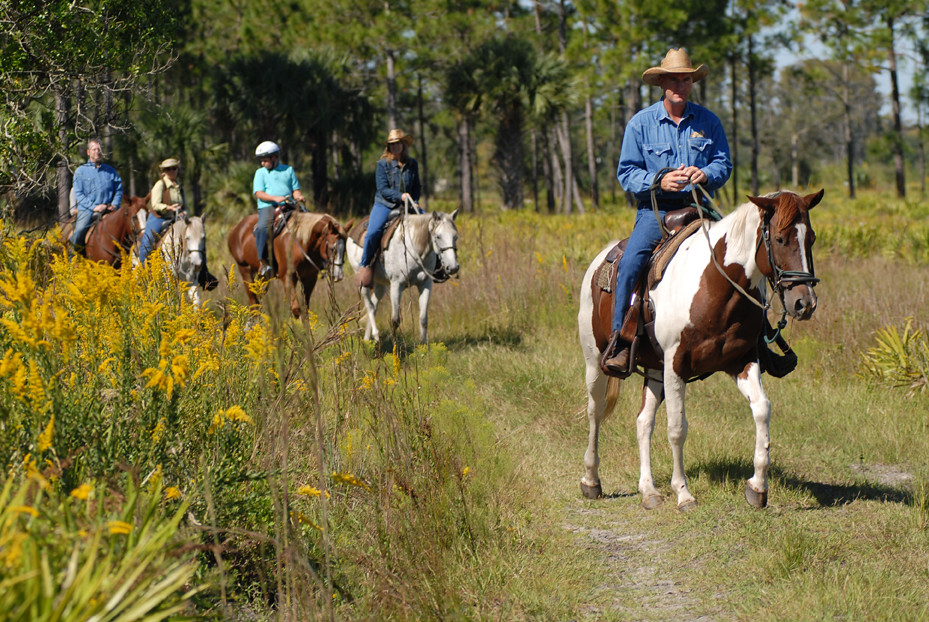
Horseback trail rides are available for those who want to slow down further. The pace is gentle, the trails wind through longleaf pine restoration areas, and the horses are well-matched to riders’ experience levels. No prior riding experience is required, and the route covers ground the zip line and coach tours don’t touch.
Pricing runs roughly $50–$75 per person for the zip tours, with eco-safari coaches and horseback rides in a similar range depending on duration. Combo packages exist. Reservations are essentially required — walk-in availability is rare, particularly on weekends between October and March when the weather cooperates and crowds show up accordingly. Weekday mornings in the shoulder season are the least crowded and the most rewarding for wildlife observation.
The working cattle operation is part of what keeps Forever Florida from feeling contrived. The land is managed for conservation, yes, but it’s also functional — the Broussard family still raises Florida Cracker cattle, one of the oldest breeds in North America, descended from Spanish stock brought over centuries ago. That history runs underneath everything here, quietly, without much fanfare.
It’s not for visitors looking for manicured paths and gift shops at every turn. The trails are wild, the Florida heat is real, and the insects remind you where you are. But for anyone who wants to see what this peninsula looked like before the interstates arrived, Forever Florida offers a rare kind of access — not a simulation of the landscape, but the landscape itself.