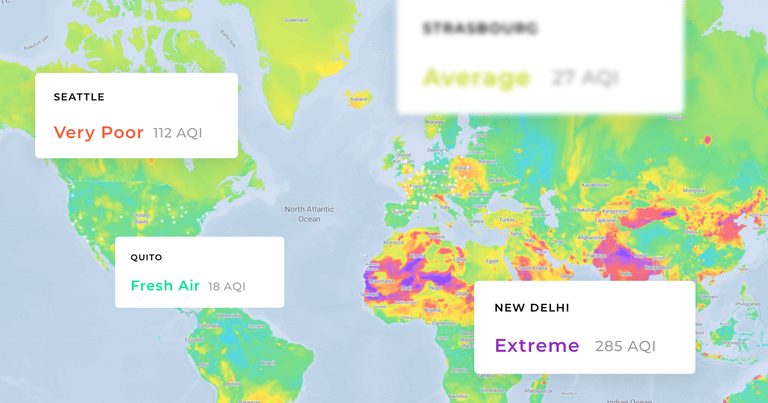
Arlington residents received mixed air‑quality updates on Thursday, with two monitoring services reporting conditions that both signal health considerations for the community.
Weatherbug listed the Air Quality Index (AQI) at 43, classifying the day as “moderate.” The site noted a PM2.5 concentration of 19.6 µg/m³, PM10 at 82.5 µg/m³, ozone (O₃) at 12.8 ppb, nitrogen dioxide (NO₂) at 10.4 ppb, sulfur dioxide (SO₂) at 0.18 ppb, and carbon monoxide (CO) at 386 ppb. Health advice from Weatherbug warned that people with lung or heart conditions, the elderly, children, and those exercising outdoors should take precautions, though it did not recommend staying indoors.
Plume Labs reported a “poor” air‑quality rating and provided live pollutant measurements: PM2.5 at 31.0 µg/m³, PM10 at 52.0 µg/m³, NO₂ at 4.0 ppb, and O₃ at 4.0 ppb. The service highlighted that the PM2.5 level exceeds the World Health Organization’s 24‑hour limit for particulate matter, suggesting heightened risk for respiratory irritation and cardiovascular strain.
Both sources identified the primary sources of the pollutants as fuel‑burning processes in industry and transportation, as well as natural dust, smoke, and pollen for larger particles. The differing AQI classifications stem from each platform’s calculation method and data timing, a fact the reports themselves acknowledge.
Local health officials advise residents to monitor real‑time updates, limit prolonged outdoor exertion if they have asthma, bronchitis, or other lung conditions, and keep windows closed during peak pollution periods. Parents with young children are encouraged to watch for signs of respiratory distress, while seniors and pregnant women should be especially vigilant.
What’s next: Both Weatherbug and Plume Labs provide hourly forecasts, so Arlington residents are urged to check the latest readings before planning outdoor activities. The city’s environmental department will release a detailed weekly outlook later this week, offering guidance on any anticipated changes in pollutant levels.
Sources: weatherbug.com, air.plumelabs.com, weather.com