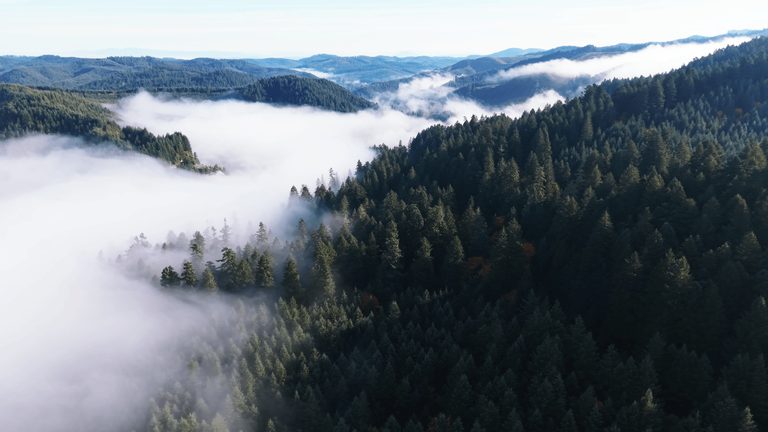
Grandmother’s Grove, a 60‑acre old‑growth stand in Lane County designated as an Area of Critical Environmental Concern, is once again at the center of a federal‑state debate. The Bureau of Land Management (BLM) is drafting a new Northwest Coastal Oregon Resource Management Plan that would emphasize a return to the historically higher timber harvest levels of the 1970s and 1980s—a direction strongly supported by the Trump administration as a way to boost county budgets.
Local residents fear loss of a treasured forest
Kate Gessert, a longtime Lane County resident, recalls first stumbling upon the towering Douglas firs and western hemlocks more than two decades ago. “We were in this completely different world,” she said, describing the awe‑inspiring canopy that still draws mushroom foragers and hikers today. Yet the sight of blue spray‑painted numbers and yellow tape on the trees reminded her that the grove’s future is uncertain.
“There they are, the grandmothers,” Gessert whispered on a recent rain‑soaked visit, pointing to the ancient trunks that have stood for centuries. The grove’s protected status means it is currently off‑limits to scheduled commercial logging, but the upcoming BLM plan could change that.
Federal policy background
The BLM manages roughly 2.5 million acres of public land in western Oregon. For 1.3 million of those acres—including the lands surrounding Eugene and Springfield—the agency follows the Northwestern Coastal Oregon Resource Management Plan. That plan is now up for revision, and the draft expected in the coming weeks would shift policy toward “historically higher” harvests, echoing the timber boom of the 1970s and 1980s.
During that era, the federal government encouraged aggressive timber sales, believing the resulting revenue would support local services. The Trump administration has revived that line of thinking, arguing that increased logging can provide much‑needed cash flow to stretched county budgets like Lane’s.
Why bigger timber sales haven’t always meant bigger checks
Federal data and policy analysis paint a more nuanced picture. Even at the peak of timber receipts in the 1970s and 1980s, payments to counties were irregular. Since 2000, timber receipts have covered only a fraction of the amounts counties record as timber dollars. In recent years, when BLM’s timber receipts grew, many counties—including Lane—did not see a corresponding rise in payments.
The historic O&C (Oregon and California) timber‑payment system allocated a fixed percentage of receipts to each of the 18 counties that contain O&C lands. Lane County receives 15.27 % of those receipts. Because payments are tied to actual timber cut, they can arrive years after an auction, creating budgeting uncertainty.
Modern safety‑net payments
When timber revenues fell in the 1990s, Congress introduced “safety‑net” payments to bridge the gap. These were later codified in the Secure Rural Schools Act of 2000, guaranteeing counties a baseline amount of money regardless of timber sales. The guarantee is designed to shrink over time, and the U.S. Treasury fills any shortfall when receipts are low, returning excess funds when receipts are strong.
While this safety‑net has helped stabilize county finances, it also means that even if BLM harvests increase, the direct benefit to Lane County may be limited.
Local leaders weigh the trade‑offs
Some federal and local officials argue that keeping large tracts like Grandmother’s Grove off‑limits restricts potential logging revenue that could support schools, roads, and public safety. Others, including conservation groups and many Lane residents, stress the ecological and cultural value of preserving old‑growth forests for future generations.
“Everything got chopped up into pieces, then we take those little pieces and start chopping them up, too,” Gessert said, warning that continued fragmentation could leave only tiny slivers of forest for conservation.
What’s next?
The BLM will release its draft plan for public comment in the coming weeks. Residents, environmental advocates, and county officials are encouraged to submit feedback, emphasizing the need to balance economic goals with the preservation of irreplaceable old‑growth ecosystems.
As the Trump administration pushes for increased timber harvests to aid local budgets, the fate of Grandmother’s Grove will hinge on how policymakers weigh short‑term fiscal gains against long‑term environmental stewardship.
Original reporting: Homepage – Lookout Eugene-Springfield — read the source article.