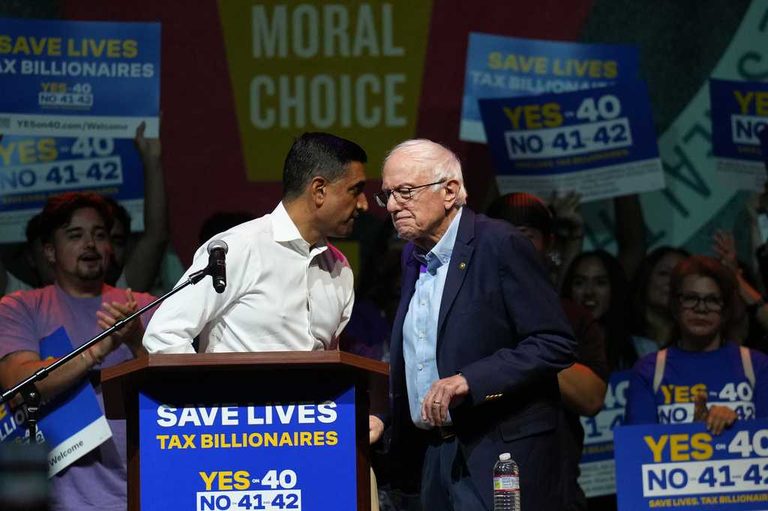
California voters sent a clear message in the November 2026 election: the state will not adopt a new wealth tax on its ultra‑rich. Proposition 40, which would have imposed a one‑time 5% tax on individuals with a net worth over $1 billion and earmarked most of the revenue for health care, was rejected by 52% of the electorate.
Proposition 42 limits future asset taxes
At the same time, voters approved Proposition 42 by a slim margin. The measure prohibits the state from enacting future taxes on people’s financial assets, business interests, intellectual property, or retroactive levies. Because state lawmakers cannot override this amendment, it can only be repealed by another voter‑approved ballot measure.
Why the defeat matters
Political science professor Wesley Hussey of California State University, Sacramento, noted that the loss reflects a waning Democratic electorate in a state traditionally seen as a liberal stronghold. “This was the time to pass something that was pretty lefty and progressive and had a lot of opposition,” he said.
Opponents of the billionaire tax outspent supporters by a factor of ten to one, raising more than $333 million. Major donors included tech magnates Sergey Brin and Eric Schmidt. Governor Gavin Newsom warned that the proposal would be a bad financial deal for California, a state that relies heavily on the wealthy for income‑tax revenue.
Supporters frame the loss as a step forward
Proponents, including SEIU United Healthcare Workers West, Senator Bernie Sanders, and Representative Ro Khanna, argue that the defeat is not the end of the conversation. Khanna said, “The game is up, people have had it and this election is just the beginning,” suggesting a renewed push for billionaire accountability in future elections, possibly as early as 2028.
The union originally tried to scale back the tax to 2% before the ballot deadline, but Governor Newsom’s office deemed the revised proposal still fundamentally flawed. The effort to reach a compromise collapsed, and the union proceeded with the original 5% plan despite growing opposition.
Broader tax landscape
While California rejected the wealth tax, other states moved forward with higher taxes on the affluent. Washington upheld a 9.9% tax on household income over $1 million, and Colorado adopted a graduated income tax that includes an 8.4% rate for incomes above $1 million. Both states plan to direct the revenue to education, health care, and other public services.
California still maintains a 1% income tax on millionaires, approved in 2004 to fund mental‑health services, and voters approved an extension of a tax increase on incomes exceeding $371,000 to support education.
Future outlook
Research director Carl Davis of the Institute on Taxation and Economic Policy described the results as a “really good batting average” for advocates of higher taxes on the wealthy, noting that divisions among organized labor weakened the billionaire tax effort.
Amber Wallin, executive director of the State Revenue Alliance, predicts the movement for higher taxes on the rich will continue to grow, especially in states where Democrats now control both legislative chambers and the governor’s office.
California Gov.-elect Xavier Becerra, a Democrat succeeding Newsom in January, opposed the billionaire tax but acknowledged that the level of support it received sent a clear signal that many Californians feel the wealthy are not paying their fair share. He said he wants to address the issue, though he offered no specific plan.
Labor leader Lorena Gonzalez, president of the California Federation of Labor Unions, warned that opposition from groups such as the California Teachers Association and Planned Parenthood made the ballot fight more difficult. She emphasized that the battle is only beginning and urged continued activism.
Overall, the election results illustrate a growing skepticism among California voters toward expansive tax measures targeting the ultra‑wealthy, while also highlighting a broader national trend of states experimenting with higher taxes on high earners.
Original reporting: KOAT Albuquerque — read the source article.