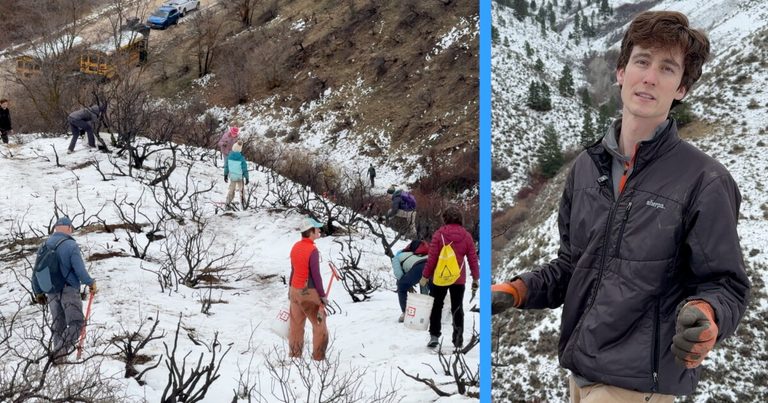
Months after the Claremont Fire scorched over 6,600 acres of the Boise Foothills, a wave of volunteers gathered on a snowy Saturday to plant thousands of native seedlings across the burn scar. The effort, coordinated with Idaho Fish and Game, aims to jump‑start natural recovery and create lasting habitat for the region’s wildlife.
Why planting now makes sense
Boise State University ecology Ph.D. student Liam Getzloff explained that the moist, winter‑softened soil actually provides ideal conditions for establishing hardy native species such as bitterbrush, rabbitbrush, native grasses and wildflowers. While it isn’t the season for tomatoes, it is a prime time for roots to take hold before the plants go dormant for the winter. As temperatures rise in spring, many of the seedlings should unfurl green leaves as early as March.
Ecological benefits
Re‑establishing native vegetation helps the foothills become more fire‑resilient. Invasive grasses, which spread quickly after a blaze, can fuel future fires. By planting native shrubs and grasses, the restoration team hopes to reduce that risk and move the ecosystem toward a healthier, more stable state.
The seedlings also serve as critical food and shelter for wildlife. Getzloff noted that the shrubs provide “thermal refuge” and year‑round nutrition for deer, elk and smaller mammals, while the wildflowers will support pollinators such as bees and butterflies. Deer tracks were already visible in the snow near the planting site, a sign that animals are returning to the area.
Community involvement
The project has drawn a diverse group of participants—from mountain bikers and trail runners to hunters and wildlife enthusiasts—demonstrating the deep connection many Idaho residents feel toward the foothills. Volunteers spent the morning digging and planting in the snow, while another crew collected seed elsewhere in the range to expand the effort.
“A lot of people really care about these landscapes,” Getzloff said, reflecting the community’s shared stewardship ethic. The collaborative spirit underscores how local volunteers can complement state agency initiatives to protect and restore natural resources.
Scale of the effort
Idaho Fish and Game reports that roughly 5,000 native seedlings are slated for planting through this restoration drive. The work is part of a broader strategy to accelerate the foothills’ natural regeneration, improve wildlife habitat, and reduce the likelihood of future catastrophic fires.
Looking ahead
As the seedlings take root and the snow melts, the Boise Foothills will gradually regain the verdant character that made them a beloved recreation area for generations. Continued volunteer support and ongoing monitoring by ecologists will be essential to ensure the long‑term success of the project.
For those interested in joining future planting events or learning more about the restoration plan, contact Idaho Fish and Game’s restoration office or visit their website for upcoming volunteer opportunities.
Original reporting: KIVI Idaho News 6 Boise metro (local) — read the source article.