San Francisco – A San Francisco Superior Court judge indicated that prosecutors have presented sufficient evidence to proceed to trial against two shelter workers accused of helping a robbery suspect evade police after Officer Brittney Taylor was critically wounded.
Preliminary hearing moves toward trial
Judge Dawn Payne, presiding over the preliminary hearing, said, “I do think the people have met their burden,” though she left open the possibility that the defense could still persuade her. A formal ruling is scheduled for Dec. 16 after the parties submit additional arguments.
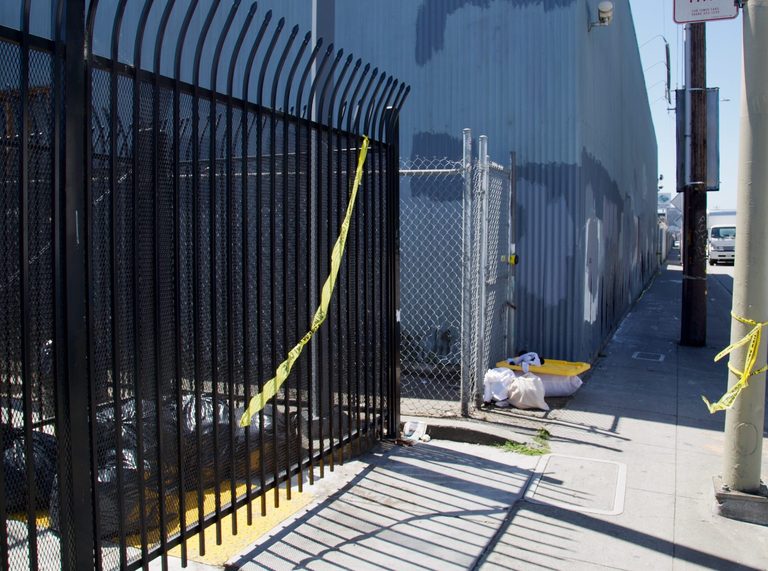
Prosecutors allege that Oliver Barcenas, a shelter supervisor, and Erika Porter, a security aide, knowingly concealed Norris Reed III, the suspect who fled a shootout on May 31. Reed, armed with two guns, was pursued by police and took refuge at the Bayshore Navigation Center, where he remained in the courtyard for roughly 90 minutes while officers searched the area.
Alleged actions by shelter staff
According to the indictment, Barcenas failed to alert police to Reed’s presence, instead handing the suspect a jacket and hat through an open window. Porter is accused of providing a misleading statement to officers, claiming she saw Reed running away when video shows her at the front desk shouting for him to leave.
If convicted, both face felony charges of acting as an accessory after the fact and obstructing or delaying a police officer. Barcenas, who was on probation for a prior gun charge, could also face additional penalties for violating that probation.
Evidence presented
The district attorney’s case relies heavily on surveillance and body‑camera footage. Video released to the court shows the shelter workers startled by gunfire at about 10:45 p.m. on May 31, then later appears to show Reed sprinting away, doubling back, and entering the shelter’s courtyard. Footage also captures Porter at the front desk urging Reed to leave, while Barcenas and other staff escorted him back out and shut the front door.
Porter’s attorney, Rose Mishaan, acknowledged her client did not give officers the full story but said Porter was terrified and feared for her safety. Mishaan suggested the most the district could prove is a misdemeanor, noting the district attorney’s office seems to be pursuing the case aggressively because an officer’s life was at risk.
Community concerns and legal standards
The case has sparked criticism from shelter officials who argue the district attorney’s office is over‑reaching in a situation already fraught with danger. Defense counsel for Barcenas contends his actions were directed by a higher‑ranking shelter official, not a personal decision to aid a criminal.
Should the case go to trial, the prosecution must prove “beyond a reasonable doubt” that Barcenas and Porter knowingly concealed Reed, a higher standard than required at the preliminary hearing. Defense attorney Gabriel Navarrette called the evidence “flimsy,” noting that key facts may simply not exist.
Next steps
The judge will review final briefs on Dec. 10 and issue a ruling on Dec. 16. If the case proceeds, a jury will decide whether the shelter workers’ conduct rises to the level of felony accessory and obstruction.
San Franciscans watching the proceedings are reminded that the city’s homeless services operate under challenging conditions, but the rule of law remains paramount in protecting both public safety and the rights of all citizens.
Original reporting: Mission Local — read the source article.